
Socialization
Dog socialization in Houston: structured neutrality, not a free-for-all
Half the reactive dogs in the training home were socialized at a dog park, which is to say they were flattened by a Lab at four months and have been defending themselves ever since. Socialization is calm, not chaos, and Houston has plenty of places to do it right.
Last reviewed September 11, 2026 · by the Best Dog University Team
What socialization is
Calm exposure until the world is boring.
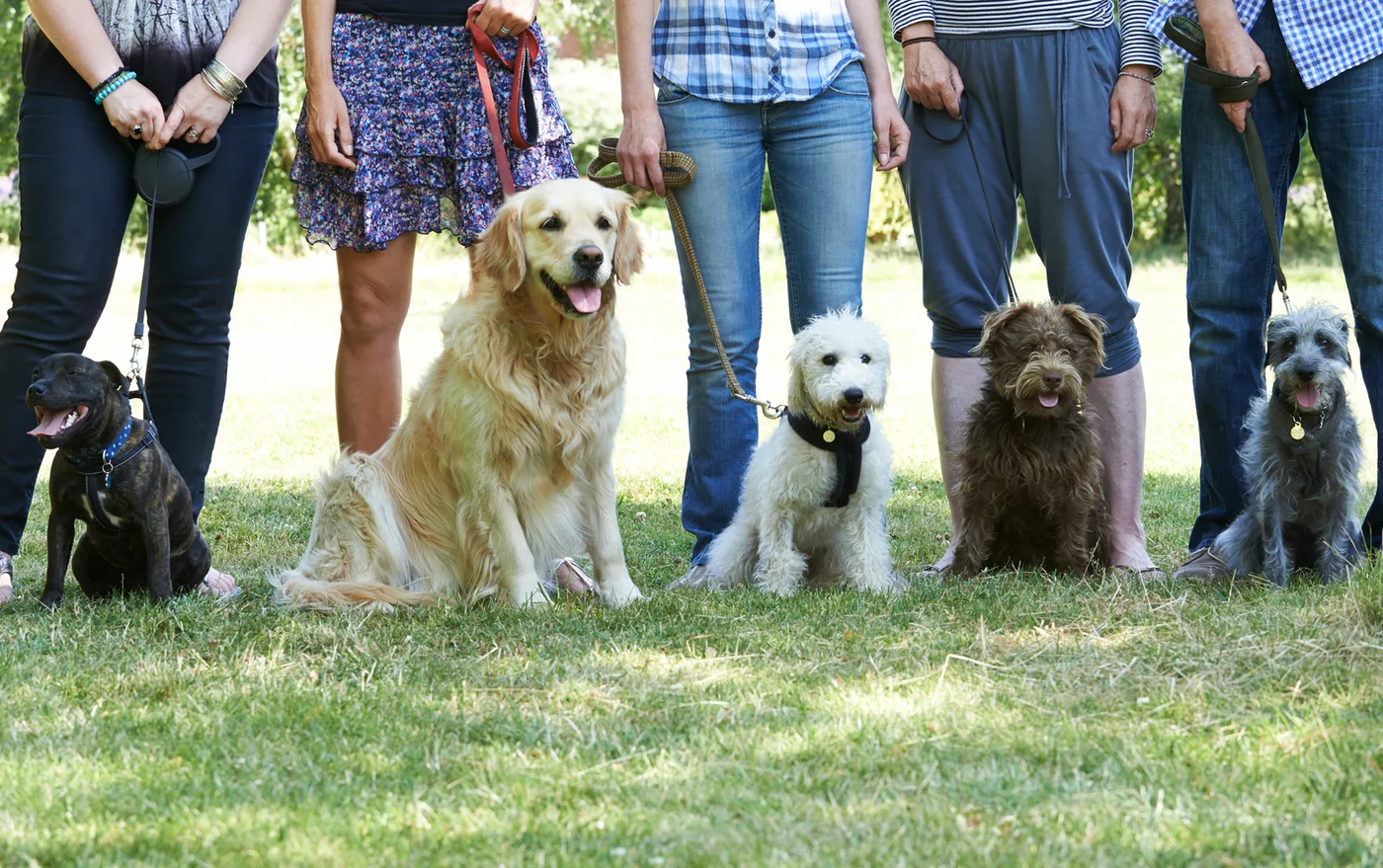
A socialized dog can walk past a jogger, a stroller, a man in a hat, a barking dog behind a fence and a skateboard without changing pace. It has learned that those things exist and do not matter. That learning happens by seeing them at a distance the dog can hold, with calm and food, closer over days, until the dog looks at the thing and looks back at you. It does not happen by being greeted by every dog on the sidewalk, which teaches the dog that dogs are the point of the walk.
For a puppy the window is roughly eight to sixteen weeks, when new things are accepted easily; after that the same work takes longer and is called something else, but it is the same work.
- Calm exposure at a distance the dog can hold
- Looking at the thing and back at you
- Not greetings, not play with strangers
- Puppies: the window closes around sixteen weeks
Why the dog park is not it
Uncontrolled dogs at close range teach the wrong lesson.
A dog park is thirty dogs of unknown temperament at zero distance with no handler in control. For a confident adult with a recall it is a place to run. For a puppy or a nervous dog it is a place to be bowled over, mounted or cornered, and one bad minute at four months can produce a dog that lunges at every dog for life. Houston's busy parks, Millie Bush, Johnny Steele, Danny Jackson, are where a lot of the reactivity we see was made, by families who were told to socialize the puppy.
Socialize instead on parallel walks with one calm known dog, at the fence line of the park on a leash, and in the store aisles where dogs pass at a distance you control.
- Unknown dogs at zero distance with no control
- One bad minute at four months lasts for years
- Parallel walks with a calm known dog instead
- The park fence line on a leash, not the park
How we build it
Puppies in a cart, adults on a leash, everyone at their own distance.
A puppy under four months rides through the world in a cart at the pet store, sits on a lap outside a quiet cafe, meets calm adults on leash and hears the vacuum from the next room, two new things a day, each ending before the puppy worries. That is the socialization built into the Puppy Development Bundle. An adult or a rescue that missed the window gets the same exposure on a leash: strangers, dogs, bikes and noise at a distance it can hold on Cypress sidewalks, in store aisles and on the trails, closer over days, in a Gold or Platinum stay where it happens daily. The handover teaches the family to keep it going.
The rule for both is the same: the dog decides the distance, the handler decides the pace, and nothing is forced.
Puppies: two calm new things a day, in a cart until the vet clears the ground
No greetings with strange dogs; walking past instead
Adults: strangers and dogs at a distance the dog can hold
Store aisles, sidewalks and trails as the environments
Distance closed over days, never in a session
Parallel walks with calm known dogs for dog-to-dog work
Handover: the family keeps the exposure going
Which program
The bundle for puppies, Gold or Platinum for the dog that missed it.
Puppies under four months take the Puppy Development Bundle, $550 in Cypress or $750 in your home, and socialization is built into every session. An adult that is under-socialized but not fearful or reactive, the dog that has simply never been anywhere, gets it in a two-week Gold stay at $2,500 with daily exposure and a go-home session. A dog that missed socialization and became fearful or reactive needs the three-week Platinum program at $3,750, where the exposure is behavior work with distance and control, and unlimited lessons afterwards keep it going.
| Dog | Program | Price |
|---|---|---|
| Puppy under four months | Puppy Development Bundle | $550 / $750 |
| Adult that has never been anywhere | Gold, 2 weeks | $2,500 |
| Adult that missed it and is fearful or reactive | Platinum, 3 weeks | $3,750 |
Houston specifics
Store aisles, the summer puppy and the parallel walk.
The pet and hardware stores along 290 and I-10 are the best socialization environments in the city: cool, controlled, full of people and carts, with dogs passing at a distance and an exit close by. A puppy born in the spring meets the Houston summer at the peak of its window, and the store aisle is how it gets socialized when the pavement is too hot to walk; the AVMA's heat guidance is why. The Bridgeland and Towne Lake trails, at the quiet hours, are where the parallel walks happen, and the fence line at Bill Archer Bark Park is where a dog learns to watch a park without joining it.
The programs
Programs that socialize a dog properly.
The bundle for puppies, Gold for the adult that has never been anywhere, Platinum for the one that missed it and became reactive.


Asked and answered
Questions people ask about this.
When should I socialize my puppy?
From the day it comes home until about sixteen weeks, carried or in a cart until the vet clears the ground, two calm new things a day. After sixteen weeks the same work takes longer, so the bundle is booked early for a reason.
Is the dog park good socialization?
No. Uncontrolled dogs at zero distance teach a puppy or a nervous dog that dogs are dangerous or that dogs are the point of the walk, and either becomes reactivity. Parallel walks with a calm known dog and store aisles are socialization; the park is not.
Can an adult dog still be socialized?
Yes. The window makes it easier for puppies, but an adult learns that strangers, dogs and noise are background the same way: exposure at a distance it can hold, closer over days. A Gold stay does it daily for the dog that has never been anywhere.
My puppy cannot go on the ground before its shots. How do I socialize it?
In a cart at the store, on a lap outside a cafe, in your arms on a busy sidewalk, in the car through the drive-through. The puppy sees, hears and smells the world without touching the ground, which is what the window needs.
Should my dog meet other dogs on the walk?
Not on leash with strangers. Walking past calmly is the skill; greetings teach the dog to pull toward every dog it sees. Play happens with known, calm dogs in a yard, after a parallel walk, on your terms.
Keep reading
Free consultation · 10% off this fall
Socialize the dog properly.
The free phone consultation is a direct call: how old the dog is, what it has seen, and whether the bundle, Gold or Platinum is the right plan. A $250 deposit holds the dates.