
Day by day
What happens during board and train, day by day?
Owners imagine either a boot camp or a vacation. It is neither. It is a house with a routine, a trainer who runs every piece of it, and a dog who learns the routine fast because it is the same every day. Here is what a day actually contains, and how the days change across a program.
Last reviewed September 10, 2026 · by the Best Dog University Team
A day in the house
The day has the same shape every day, which is exactly why it works.
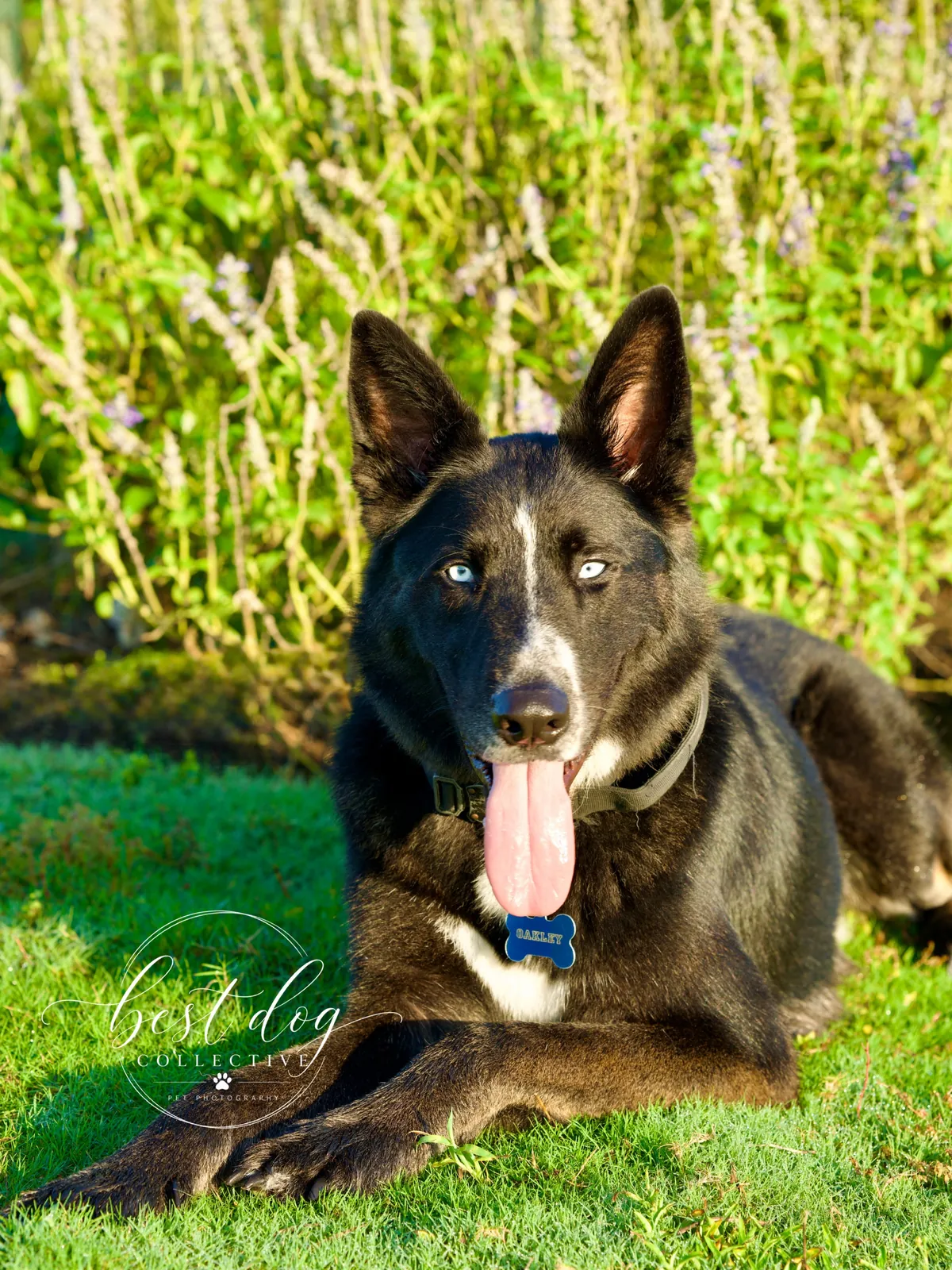
Dogs relax when the day is predictable. In the training home the morning starts with a structured walk, then breakfast earned with a sit and a release. A short session follows on whatever command that week is about, first in the yard and then in the house with doors opening and people moving. Place comes next, with real duration, while dishes get done and the front door opens for a delivery.
Midday is rest in a crate or on place, because calm is a skill and rest is when the morning's work sets. Afternoons bring exposure: the yard with other dogs, a sidewalk, a store aisle. Evening is a walk, dinner and settling in the living room like a member of the household.
Morning structured walk and an earned breakfast.
Command session: the week's skill, yard then house.
Place with duration while the household runs.
Midday rest in the crate or on place.
Afternoon exposure: yard, sidewalk, store or park.
Evening walk, dinner and settle in the living room.
How the weeks change
Week one is structure, week two is obedience, week three is the real world.
The first days are about the framework: earned meals, waiting at doors, place, the crate, a walk with rules. Most dogs settle into it within a day or two, and that calm is visible in the first update. The second week builds and proofs the commands, sit, down, place, loose leash, with duration and then distraction.
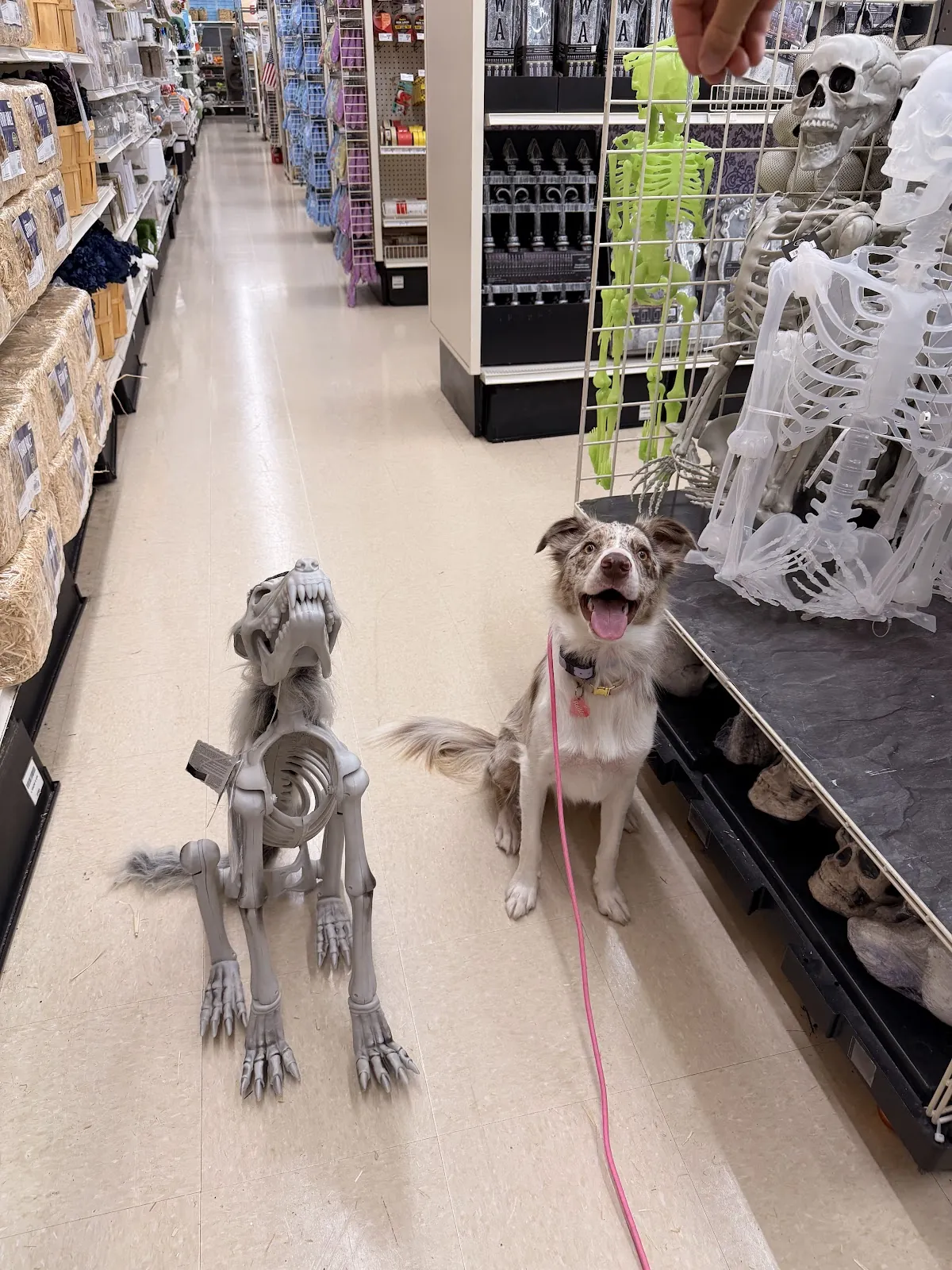
From the third week, in Platinum and VIP, the work moves into public. Field trips to pet and hardware stores along 290 and Fry Road, sidewalks in Cypress neighborhoods, park benches and the lake, each chosen for the dog's specific trigger. A reactive dog might spend a week seeing other dogs only across a parking lot before the distance closes.
Summer days
In a Houston summer the outdoor work happens early and late, and the middle of the day moves indoors.
From May to September the pavement fails the hand test by mid-morning. Outdoor sessions run at dawn and after sunset, when neighborhoods are also full of other dogs at predictable distances, which is useful. Midday exposure moves into air-conditioned store aisles, which give short sight lines and carts and strangers in a controlled space.
Water is part of summer training too. Long-line work at the lake builds recall and cools the dog, and a dog that comes out of the water on the first call has a recall that will hold anywhere.
What you see
Updates every Monday, Wednesday and Friday show the work, not a summary of it.
Three times a week you get professional photos and video: the command being built, the dog's response, the field trip, the settle. Families say it is the part they did not expect and the part that made the stay easy. A quick text in between gets a quick reply, and you can ask for a specific skill to be shown.
The other dogs in the house are limited in number and known to our team. Your dog is never thrown into a group; interaction is planned, at a distance and duration the dog can hold, and it grows as the dog proves itself.
- Photo and video updates Mon, Wed, Fri
- A quick text gets a quick reply
- Limited dogs at a time, all managed individually
The last day
The go-home session is the day the program becomes yours.
On pick-up day, or at your house if you add the $250 transportation service or book VIP, our trainer demonstrates everything the dog learned, hands you the leash and coaches you through it: the commands, the walk, place at your door, the crate routine, and what to do when the dog tests the new rules in week one at home. You leave with a written routine for the first two weeks and the lessons that follow: one after Gold, unlimited after Platinum and VIP.
The programs
The stays, from two weeks to six.
The daily rhythm is the same. The length decides how far it goes.



Asked and answered
Questions people ask about this.
Where does my dog sleep during board and train?
In our trainer's house in Cypress, in a crate or on a place bed in the household's routine, not in a kennel run. The crate is part of the training: calm rest between sessions is a skill, and most dogs settle into it within the first day or two.
How much training does my dog get each day?
Several short sessions rather than one long one, because dogs learn in repetitions with rest between. A command session, place with duration, an exposure session and two structured walks is a typical day, with the real world added on field trips from the third week.
Does my dog play with the other dogs?
In a structured way. Best Dog University keeps a limited number of dogs and our trainers use them to teach neutrality and appropriate play, not a free-for-all. Interaction is planned for each dog and grows as the dog proves it can stay calm.
What do I need to send with my dog?
Your dog's regular food with a little extra, any medications with instructions, current vaccination records and a flat collar with ID. Our team confirms the list when you book. Beds, toys and treats are provided.
Can I get an update on a specific problem?
Yes. Tell our team what you most want to see, jumping at the door, walking past a dog, settling in the crate, and the Monday, Wednesday and Friday videos will show that work as it happens.
Keep reading
Free consultation · 10% off this fall
See a stay from the inside.
Ask our team what a week would look like for your dog. The free phone consultation is a direct call.