
Puppies and virtual help
Is virtual training good for puppies?
A new puppy does not need a classroom in its first weeks. It needs a household that runs a predictable day, rewards the right choices and prevents the wrong ones. That is a planning job, and it is exactly what a virtual session is built for.

Why it fits
Puppies are a routine problem first, and routines coach well over a call.
Most puppy trouble is predictable. Accidents happen after naps, meals and play. Nipping peaks when the puppy is overtired. Chewing happens when a curious mouth meets an unsupervised room. None of that requires a trainer to handle the puppy; it requires someone to help you organize the day so the puppy succeeds by default.
A puppy also learns best where it lives. Coaching you in your own kitchen, with your own crate and back door, means there is nothing to transfer later. The habits are built in the place they will be used.
- Accidents follow naps, meals and play
- Nipping peaks when the puppy is overtired
- Chewing happens in unsupervised rooms
- Habits built where the puppy will live
The puppy day
Most of what we cover is the shape of the puppy's day.
A predictable day is the foundation for house training, crate comfort and calm behavior. A typical structure we help owners tailor looks like this.
- Straight outside on leash the moment the puppy wakes, to the same spot, with a calm reward when it goes.
- Breakfast, then another trip outside before any free time in the house.
- A short play and training window: name, sit and coming when called, a few repetitions each.
- A nap in the crate or pen before the puppy gets overtired and starts nipping.
- Repeat the cycle through the day, with a final trip outside right before bed.
- Keep the puppy on a leash or behind a gate whenever no one is actively watching it.
Nipping and chewing
Nipping and chewing improve fastest when the house is set up so the puppy cannot practice them.
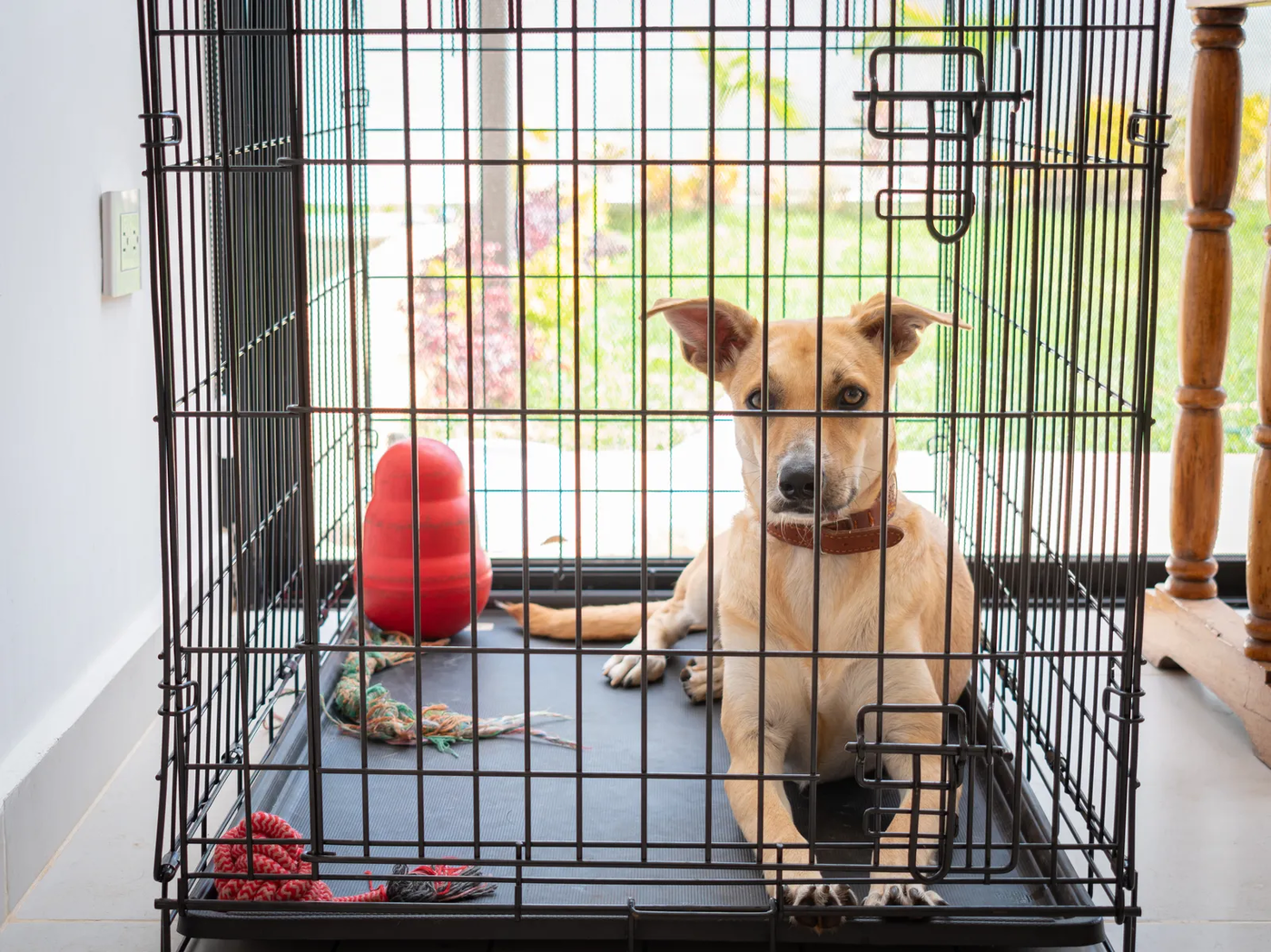
Puppies explore with their mouths, so the goal is to give that mouth a job and limit the chances to chew the wrong things. On a Zoom call, the trainer can look at where the puppy spends its day and point out what needs to move: shoes by the door, phone chargers behind the couch, the toddler's toys on the playroom floor.
For nipping, timing is everything. The trainer can watch you play with the puppy and show you when to redirect onto a toy and when to end the game calmly with a short break in the pen.
- Chew toys within reach in every room the puppy uses
- Cords, shoes and kids' toys picked up or gated off
- Short play sessions that end before the puppy is overtired
- A pen or crate for naps and unsupervised time
Socialization
Socialization planning works well virtually, but the outings themselves are yours.
Puppies need calm, positive exposure to people, surfaces, sounds and places while they are young. A virtual session helps you plan it: which experiences to start with, how far away to keep a busy sidewalk at first, how to tell a curious puppy from a worried one. Ask your veterinarian when your puppy can safely visit public places and meet other dogs.
Socialization is about quality, not quantity. A puppy that watches a grocery store parking lot from your lap and stays relaxed has learned more than one passed between ten strangers. Families near Houston can also choose our in-person Puppy Development Bundle: four private sessions for $550 in Cypress or $750 in-home.
When to get hands-on help
Get in-person help if your puppy stiffens, growls or snaps over food, toys or handling.
Mouthy play is normal. A puppy that freezes over its bowl, growls when you reach for a chew, or snaps when you touch its paws is showing something different, and that is worth having a professional see in person while the puppy is still small.
Watch for sudden changes as well. A puppy that stops eating, seems lethargic, or starts having accidents after real progress should see a veterinarian before you assume it is a training problem.
The programs
Puppy help, virtual or in person.
A $99 virtual session works anywhere in the US. Families near Houston can also book the in-person Puppy Development Bundle.
$99per session
Phone or Zoom, anywhere in the US
Virtual consultation with our head trainer
One-on-one guidance for behavior, a new dog, introductions or a new puppy.
What age can a puppy start virtual training?
As soon as it comes home, and ideally before. The most useful puppy session often happens the week before pickup, when you can plan the crate location, the potty spot and the first few days. Once the puppy arrives, sessions focus on what is actually happening in your house.
Can virtual training help with potty training a puppy?
Yes. House training depends on a schedule, supervision and consistent rewards, all of which a trainer can coach by phone or Zoom. Bring notes on when accidents happen, and the trainer can usually spot the pattern, such as the gap after meals or play that is running too long.
How do I keep a puppy on camera during a Zoom session?
Set up a small pen or use a leash tied to your waist, give the puppy a chew, and prop the phone at floor height. A short play session and potty break beforehand helps the puppy settle. Plan to pause if the puppy needs to go out.
Is virtual puppy training enough on its own?
For many puppies, a virtual plan plus consistent daily practice covers the basics well. Puppies that guard food or toys with stiffening and growling, or owners who want hands-on help with handling, benefit from in-person sessions. Health questions always go to your veterinarian.
Can a virtual session help me choose where to put the puppy's crate?
Yes. On Zoom the trainer can look at your floor plan and suggest a spot that is quiet but not isolated, away from heavy foot traffic, and easy to reach for night potty trips. Crate placement makes a real difference to how quickly a puppy settles.
Virtual session, $99
Plan your puppy's first weeks.
Book a $99 virtual session by phone or Zoom with our head trainer. Bring your puppy questions and leave with a daily routine that fits your house.