
Why does my dog
Is balanced training cruel?
This question comes up on a lot of our phone calls, usually from a family that has read two opposite things online, and our trainers would rather answer it plainly than dodge it. Here is what we mean by balanced, what we do not do, and how to judge any trainer, including us.
Last reviewed September 11, 2026 · by the Best Dog University Team
The short version
Reward what you want, set fair boundaries for what you do not, and teach before you correct.
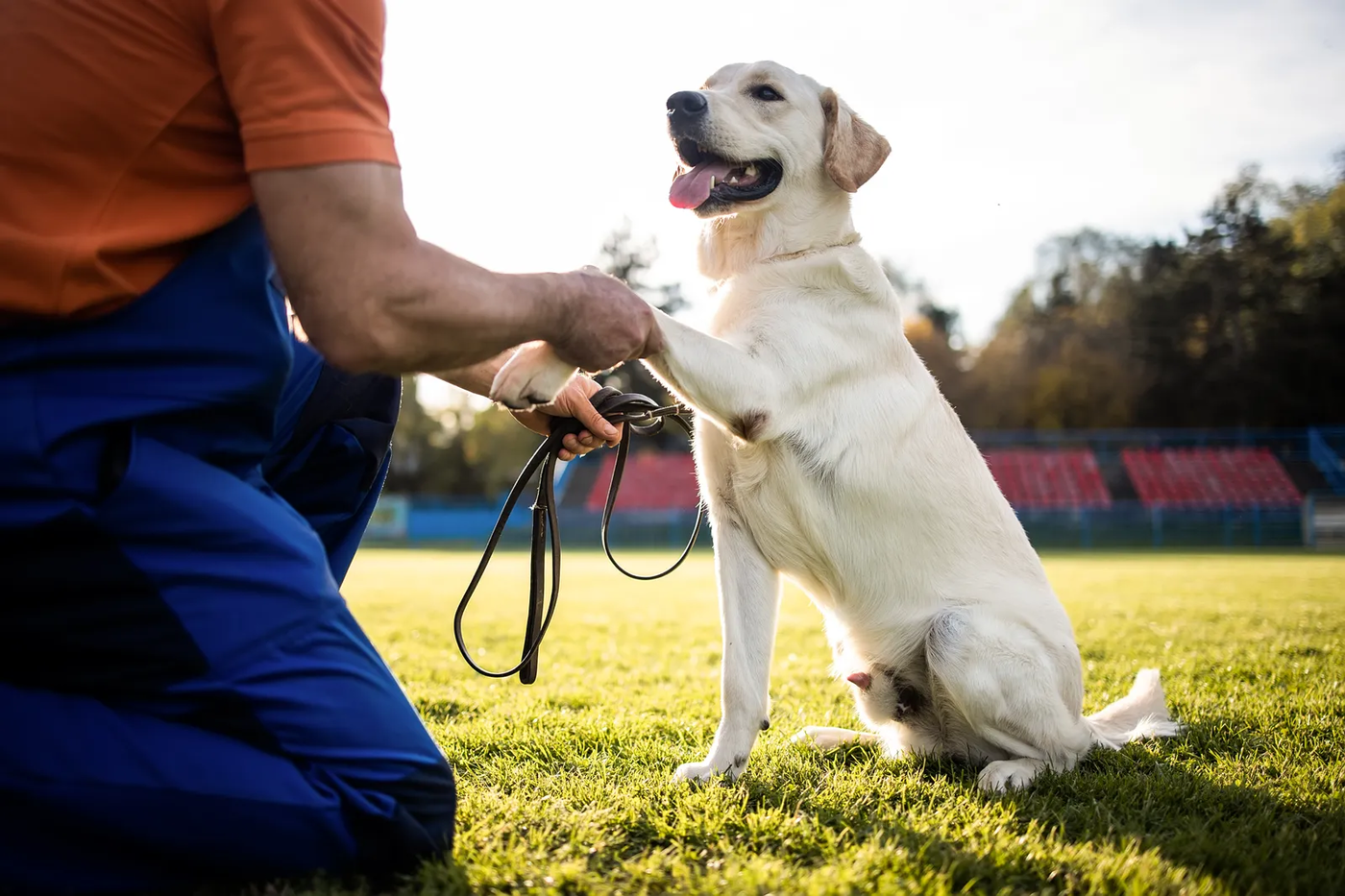
Balanced training uses both halves of how dogs learn: the behavior you want is rewarded, with food, play, freedom and praise, so the dog does more of it; the behavior you do not want meets a consequence the dog understands, a leash that stops the walk, a place bed instead of the doorway, a brief and clear signal on a collar the dog has been taught, so the dog does less of it. The order is fixed: the dog is taught what to do before anything is corrected, and corrections are information, not anger. A dog trained this way learns faster and lives with fewer restrictions, because it understands both yes and no and can be trusted in more places.
What it is not is a license for force. A trainer who corrects a dog that was never taught, who uses a tool to punish, or who is frustrated, is not balanced; they are bad, under any label.
- Wanted behavior is rewarded generously
- Unwanted behavior meets a consequence the dog understands
- Teaching always comes before correcting
- Corrections are information, never anger
- Force without teaching is bad under any label
The reasoning
Why both halves matter, and where the debate actually is.
Rewards alone build behavior beautifully and struggle to stop behavior that pays better than food: a dog chasing a deer, lunging at a dog or bolting out a door is being rewarded by the world, and a treat for not doing it competes poorly. A fair, clear consequence closes that gap, which is why balanced trainers take the aggression, reactivity and off-leash cases that reward-only trainers often refer out. The debate is real and worth having: the risk of a consequence is that it is applied wrong, on a fearful dog, on a dog that did not understand, or by a handler who is angry, and a badly run balanced program does damage. The answer is not to abandon the half of learning that stops dangerous behavior; it is to run it carefully, on the right dog, after teaching.
Tools are the flashpoint. A prong or an e-collar used as a clear, low-level cue after teaching is communication; the same tool used to punish is cruelty. The tool does not decide which; the trainer does.
- Rewards alone struggle against behavior the world pays
- A clear consequence closes the gap for dangerous behavior
- The risk is a consequence applied wrong
- Run carefully, on the right dog, after teaching
- The tool does not decide; the trainer does
What it means for your dog
Puppies, fearful dogs, aggressive dogs and the dog that just needs manners.
A puppy at the training home is trained almost entirely with rewards and management, because a puppy is learning what to do and a correction for a thing it never learned is unfair; boundaries arrive as the puppy shows it understands. A fearful dog gets structure, distance and rewards, and no pressure tools, because pressure on a frightened dog confirms the fear. An aggressive or reactive dog gets the full method: teaching first, then clear consequences for the lunge, because the lunge is dangerous and the world is rewarding it. A dog that needs manners gets rewards for the manners and consequences that are mostly management: the leash, the place bed, the closed door. The mix is chosen for the dog, and our team explains it on the phone.
- Puppies: rewards and management, boundaries as they understand
- Fearful dogs: structure, distance, no pressure
- Aggressive and reactive dogs: teaching, then clear consequences
- Manners: rewards, and consequences that are mostly management
How to judge any trainer
Watch the dogs, ask the questions, and walk away from anger.
Judge a trainer by the dogs: the dogs in their care should look relaxed, engaged and eager to work, not flat, flinching or shut down, and a trainer who will not let you watch a session is answering the question. Ask what happens when a dog gets it wrong and listen for a plan that involves teaching, management and a fair consequence in that order. Ask what tools they use and why, on which dogs, and whether they will show you the fit. Ask what they do with a fearful dog. And walk away from any trainer who is angry at a dog, who promises results, who uses the same tool on every dog or who cannot explain the method in plain words. Those rules apply to us, and the free phone consultation is where to apply them. Houston has trainers of every kind, from home-based programs in Cypress to kennels and franchises across the metro, and the same questions sort all of them.
Watch a session, or ask why you cannot
Look at the dogs: relaxed and engaged, or flat and flinching
Ask what happens when a dog gets it wrong, and listen for teaching first
Ask which tools, on which dogs, and why
Ask what they do with a fearful dog
Walk away from anger, promises and a single tool for every dog
Apply all of it to us on the phone
The program
Every program here is balanced, explained, and shown at the handover.
Gold at $2,500, Platinum at $3,750 and VIP at $10,000 are all balanced programs, with the method explained on the free phone consultation, the tools chosen for the dog, and the go-home session showing the family exactly how the dog was trained and how to continue it. The puppy bundle at $550 or $750 at home is almost entirely rewards and management. The how-it-works page walks through a day in the training home, and the prong collar and e-collar questions have their own pages. A dog should come home relaxed, engaged and confident; if it does not, the training was wrong, and we say so.
The programs
Programs that use the method described here.
Gold and Platinum for the full method, taught before corrected; the puppy bundle for rewards and management at the start.


Asked and answered
Questions people ask about this.
Is balanced training the same as dominance training?
No. Dominance theory, the idea that a dog misbehaves to rank above you and must be put in its place, has been abandoned by the people who study dogs and is not what we do. Balanced training is about teaching, rewards, fair consequences and clear communication, not rank.
Do you use punishment?
We use consequences a dog understands, after teaching: the leash stops the walk, the place bed replaces the doorway, a brief clear signal on a collar the dog has learned. We do not use pain, fear, anger or corrections for things a dog was never taught. A dog in our care should look relaxed and engaged.
Is positive-only training better for my dog?
For a puppy learning skills, reward-based training is most of what any good trainer does, including us. For a dog whose dangerous behavior is being rewarded by the world, rewards alone often fall short, and that is where a fair consequence matters. The question is which dog, and our team answers it on the phone.
How do I know if a trainer is hurting my dog?
Watch the dogs and the trainer. Dogs that are flat, flinching, avoiding the handler or shut down are telling you. A trainer who will not let you watch, who is angry, who uses one tool on every dog or who promises results is telling you too. Ask what happens when a dog gets it wrong and listen for teaching first.
Keep reading
Free consultation · 10% off this fall
Judge the method by the dog in front of you.
Ask our team how your dog would be trained. The free phone consultation is a direct call, and every answer is on the table.