
Choosing a trainer · Criteria
How to choose a dog trainer in Houston
Houston has a lot of trainers and no licensing requirement, so anyone with a website and a leash can claim the title. This page is not a list of names. It is the set of questions our trainers would ask if they were hiring a trainer for their own dogs, plus the red flags that end the conversation.
Last reviewed September 10, 2026 · by the Best Dog University Team
Five questions
Ask who, where, how, and what happens after.
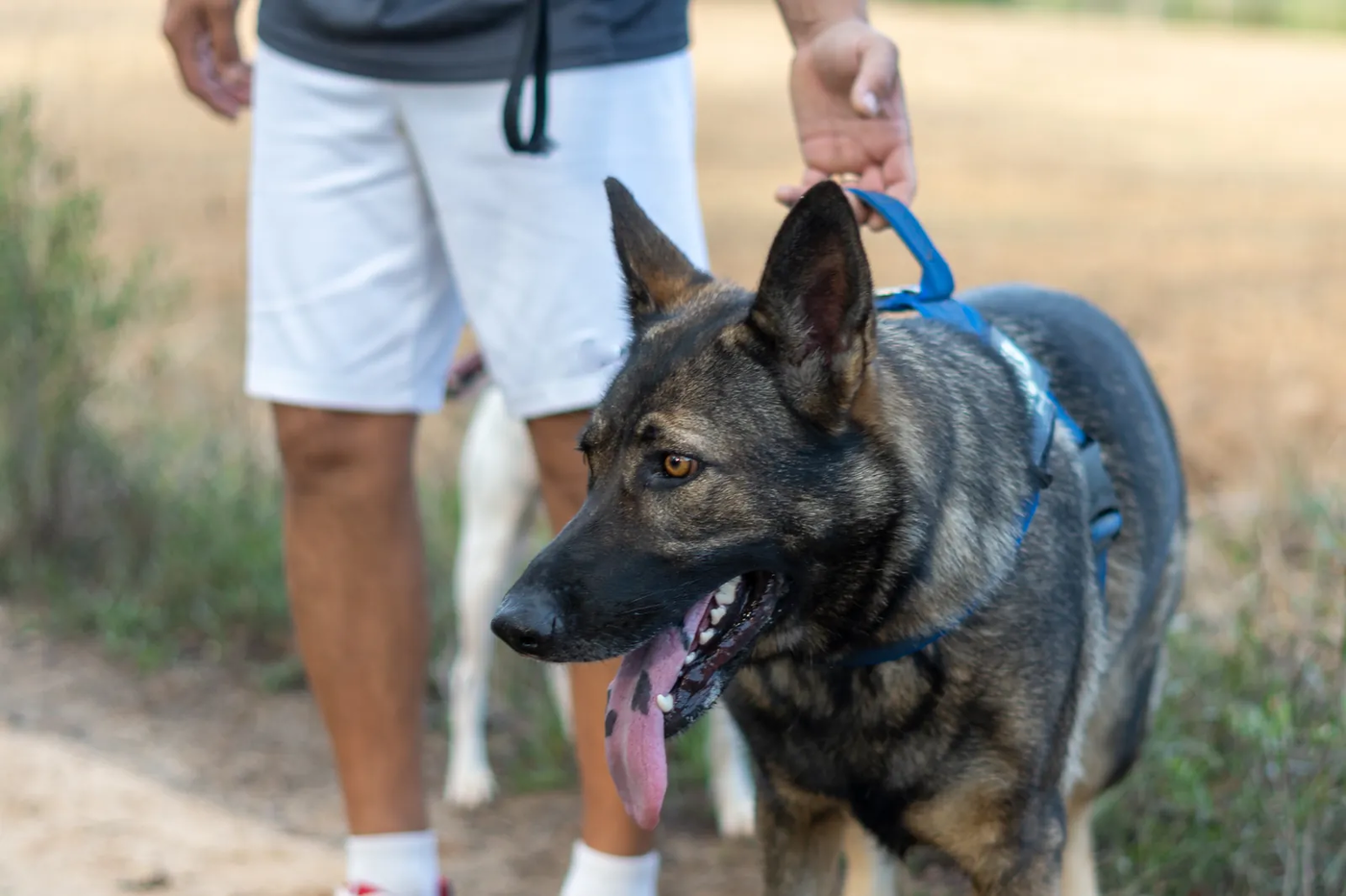
The first call tells you almost everything. A trainer who asks about your dog's age, history, triggers, your household and what you have already tried is diagnosing. A trainer who quotes a price before the questions is selling. Listen for how they talk about the problem. Reactivity, anxiety and aggression each have a cause, and you want the person who wants to find it before naming a program.
Then ask the practical questions in the checklist. The answers separate a trainer who will change your dog from one who will board him for two weeks and send a video. If a trainer cannot tell you how many dogs they have at once, who handles them at 9 p.m., or what the handover includes, keep looking.
- Who personally trains my dog, and how many dogs do you have at once?
- Where does my dog live: a home, a kennel building or runs?
- How will I see the work while he is with you?
- What does the go-home session teach me, and what support comes after?
- What would you do if my dog did this at your house?
Vetting process
Do the homework in this order before you pay a deposit.
Most owners pick a trainer in a rush, after a bad walk or a bite scare. A little order to the search prevents an expensive second attempt, and it takes about an afternoon.
Write down the three behaviors you most want changed, in order.
Read the trainer's own pages for a method you can understand and prices in plain numbers.
Watch their videos with the sound off and look at the dogs: loose bodies and soft eyes, or shut down and tucked?
Book the phone call and describe your dog honestly, including any bite history.
Ask the five questions above and note which ones get a straight answer.
Ask what happens to outdoor training in July and during a hurricane warning.
Compare two or three, then choose the one whose plan you can picture running in your kitchen.
Red flags
Some answers should end the search on the spot.
A trainer who promises to fix aggression in a set number of days is guessing. One who refuses to tell you what tools they use, or uses the same tool on every dog, has a system rather than a method. Photos of dozens of kennel runs are telling you where your dog will spend twenty hours a day. And any trainer who will not let you speak with the person doing the training is selling you a brand, not a trainer.
Watch for the opposite problem too. A trainer who says a reactive dog only needs treats and time, with no boundaries and no plan for the moment the trigger appears, is describing a hope. Sidewalks in Bridgeland and The Heights are full of dogs, cyclists and delivery vans, and your dog needs a plan for all of them.
- A fixed cure date for aggression or anxiety
- Refuses to name the tools, or uses one tool on every dog
- Kennel runs where the dog lives most of the day
- You cannot talk to the trainer who handles your dog
- No answer for heat, storms or what happens after the stay
Houston questions
The right trainer has a plan for the weather and the drive.
Houston trainers face conditions that a trainer in a cooler city never thinks about. From May to September, outdoor sessions need to happen early and late, and the trainer should be able to describe the pavement test without prompting. Hurricane season runs June 1 through November 30; ask what happens to a dog in the program if a storm makes landfall during the stay. A confident answer about evacuation, crates and updates is a good sign.
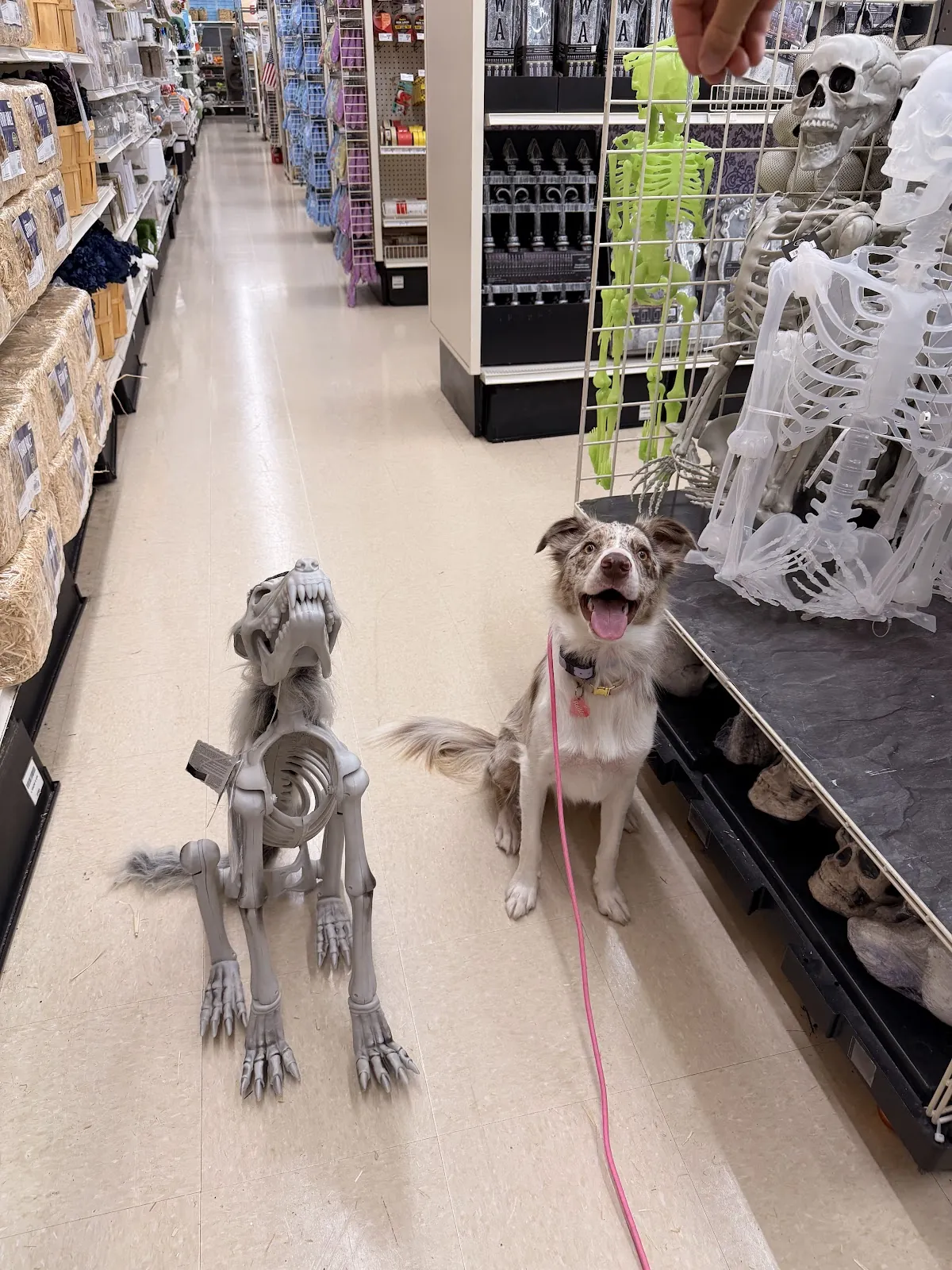
Distance matters less than people think. The training home in Cypress is about 30 to 45 minutes from central Houston, 35 to 45 from The Woodlands or Spring and 25 to 35 from Katy or Tomball, and door-to-door transport is $250 with the first lesson in your home included. The real question is whether the dog will be trained in the kinds of places you actually take him, from a store aisle in Cypress to a bench at the park.
How Best Dog University answers
Here is how Best Dog University answers its own questions.
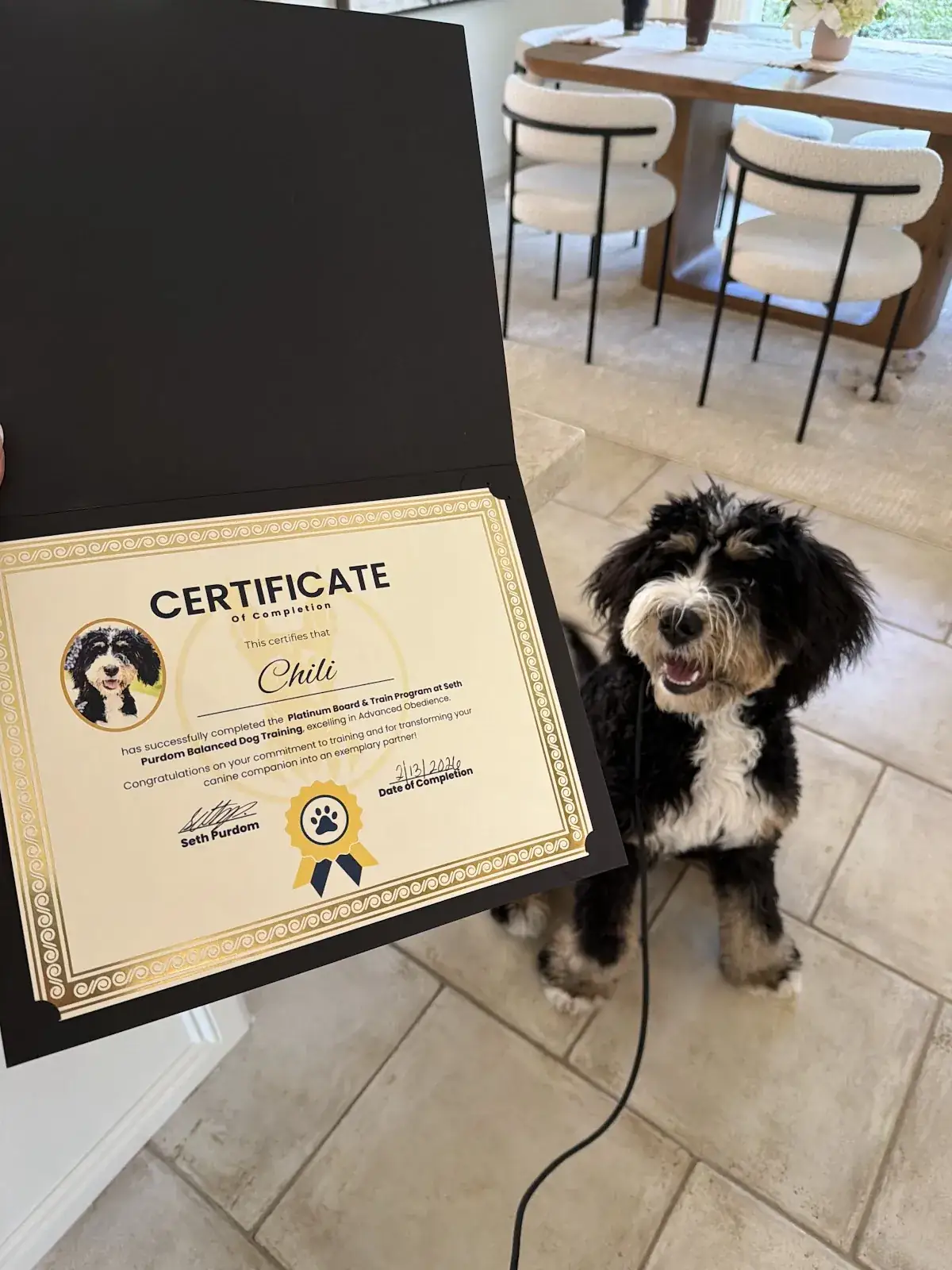
The Best Dog University team does all the training itself, with 16 years of hands-on work and more than 900 dogs behind it. Dogs live in our trainer's home in Cypress, not a kennel, and only a limited number are there at once. Photo and video updates go out Monday, Wednesday and Friday. Every program ends with a go-home session, and the three-week Platinum at $3,750 includes unlimited private lessons afterward.
On the phone our team will tell you which program fits and when a shorter one is enough. If your dog needs a veterinarian first, they will say that too. Use this page to compare Best Dog University against anyone else you are considering. That is what it is for.
The programs
How Best Dog University's programs answer these questions.
One trainer, a home setting, updates three times a week and a handover on every program.


Asked and answered
Questions people ask about this.
Do dog trainers in Houston need a license or certification?
No. At the time of writing there is no state or city license required to call yourself a dog trainer in Texas. Certifications exist and some are meaningful, but none are required. That is why the questions on this page matter more than a logo: ask who trains your dog, where, and how you will see the work.
Is a more expensive trainer better?
Not automatically. Price tells you about length and inclusions, not skill. A three-week program with a handover and follow-up lessons is worth more than a cheaper two-week stay that ends at the curb. Compare what you get when the dog comes home, and whether the trainer will still answer the phone a month later.
Should I choose board and train or private lessons?
Choose by the problem and your time. Manners and puppy issues often respond well to private lessons, where you learn alongside the dog. Reactivity, aggression and deep habits usually need the daily repetition of a live-in program, followed by lessons for you. A good trainer will tell you which, even when it is the cheaper option.
What should I ask about the trainer's method?
Ask what tools they use, when, and why. Ask what happens when the dog gets it right and what happens when he gets it wrong. Ask how they decide between rewards and boundaries for your dog specifically. A trainer who can answer in plain language without a script has a method; one who cannot has a habit.
Keep reading
Free consultation · 10% off this fall
Put our team through the same questions.
Book the free phone consultation, ask our team everything on this page and judge the answers for yourself. There is no cost and no obligation.