
Calm around the world
Does board and train include socialization?
Many families expect socialization to mean their dog playing with other dogs all day. That is the version that creates reactive dogs. What a dog needs is to find the world boring and safe, and that is taught, not left to chance.
Last reviewed September 29, 2026 · by the Best Dog University Team
The short answer
Socialization in a stay means neutrality: the dog notices the world and carries on with its job.
A well-socialized adult dog is not the one that greets every dog on the Cypress Creek trail. It is the one that walks past a barking fence, a stroller and a dog across the street on a loose leash and looks back at its owner. That is the goal of the socialization in a stay, and it is built with distance, repetition and calm, not with contact.
The house itself does a great deal. Your dog lives with a small number of other dogs and a household, so it learns to hold place while another dog is released, wait at a door while another dog walks through, and rest in a crate while the house is busy. Each of those is socialization, and each is supervised.
- The goal: calm and neutral, not friendly with everyone
- Distance first, closer only when the dog stays calm
- No unsupervised play group
- The household itself is part of the exposure
Two kinds of exposure
Inside the house every program builds neutrality; outside it, field trips in Platinum and VIP build it in public.
In Silver and Gold, socialization happens in the home, the yard and the neighborhood walks: other dogs at a managed distance, visitors at the door, traffic, bikes and kids on the street. For a young dog with manners problems, that is often exactly what is needed, because the triggers that cause trouble at home are the doorbell, the neighbor's dog and the delivery driver rather than a crowded store.
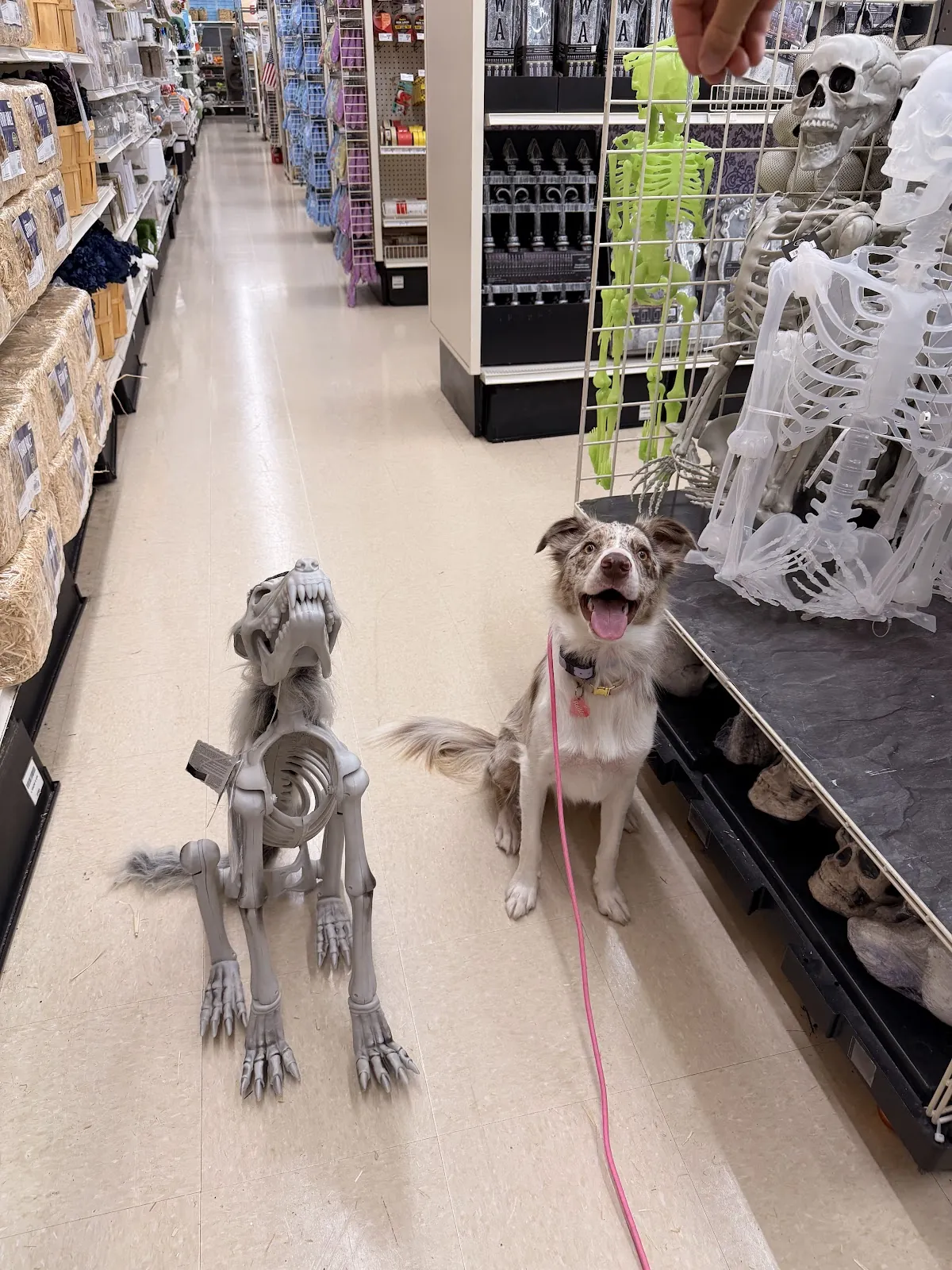
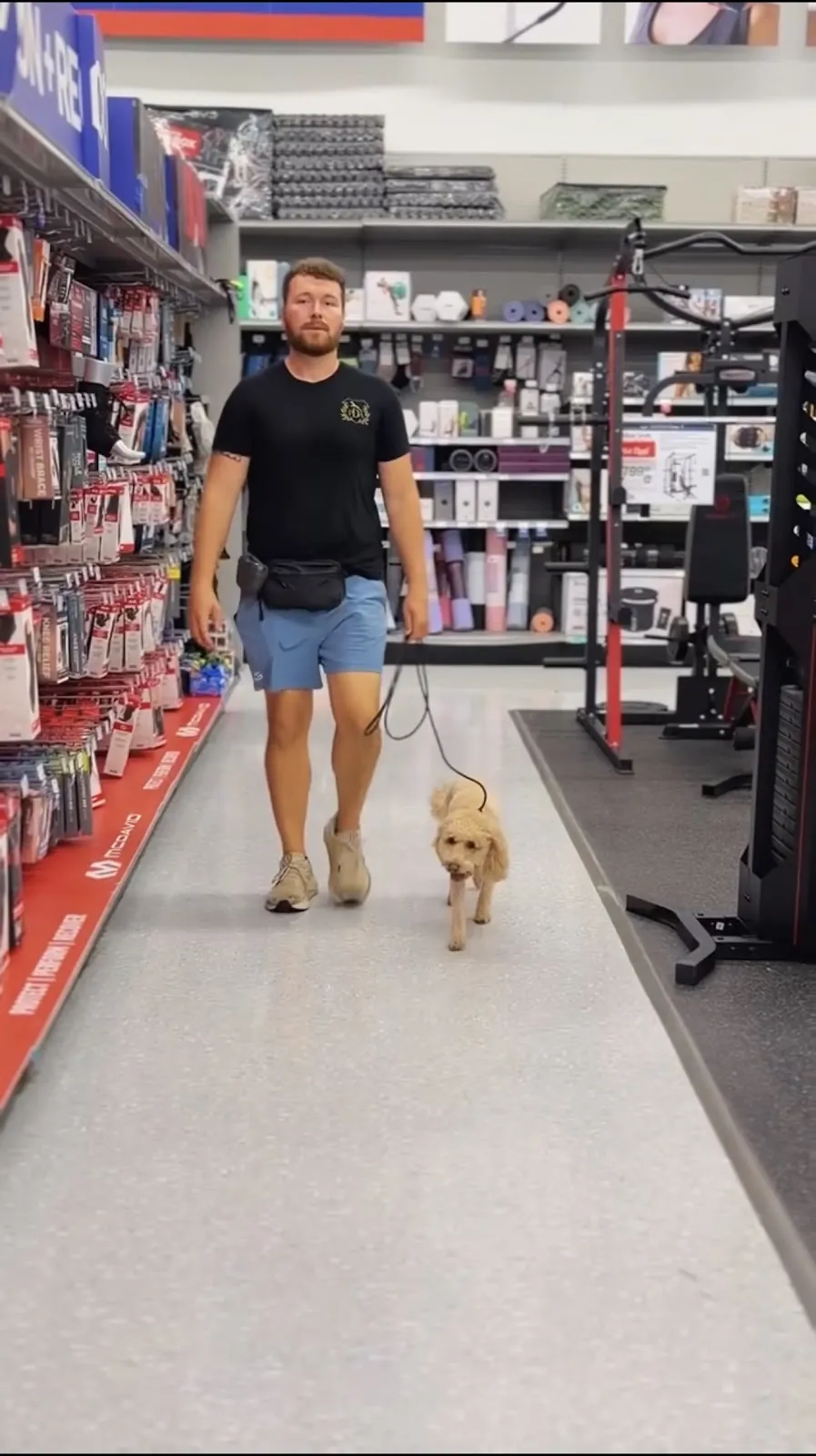
Platinum and VIP take it further. Field trips move the work into pet stores, hardware stores, sidewalks, parks and the lake, where the carts, the automatic doors, the slick floors and the strangers who want to pet the dog are all real. For a reactive, fearful or overexcited dog, that public work is the part that changes daily life.
- Silver and Gold: the house, the yard and neighborhood walks
- Platinum and VIP: stores, sidewalks, parks and the lake
- Every program: supervised calm around the dogs in the house
- The go-home session shows you how to continue it
Different dogs, different doses
A puppy, an adolescent that missed its window and a fearful rescue each need a different kind of socialization.
A puppy under about sixteen weeks is in the socialization window and too young for a stay. It needs calm exposure with its own family: carried through a store, sitting on a lap outside a coffee shop, watching dogs from a distance. That is what the Puppy Development Bundle sets up, along with the crate, potty routine and first commands.
An adolescent or adult that missed that window can still learn that the world is safe. It just takes more repetitions at a distance it can handle. A fearful rescue gets the slowest version: no forced greetings, food for calm looking, and distance before closeness. Flooding a frightened dog with the thing it fears makes it worse, and we do not do it.
Why dog parks are not the answer
Uncontrolled play at zero distance teaches the wrong lesson, which is why stays do not include it.
A dog park puts unknown dogs together at close range with no one in control, and a dog learns one of two things there: that dogs are frightening, or that dogs are the most exciting thing in the world. Either one turns into pulling, barking and lunging on leash. Structured exposure teaches the third option, that other dogs are background.
Houston adds practical reasons too. Summer afternoons are too hot for play, mosquitoes and heartworm risk are with us most of the year, and the fireworks around July 4 and New Year test any dog's nerves. A dog taught to settle in a house copes with all of them better than one that has only learned to play.
Start at a distance where your dog notices and stays calm
Reward calm looking with food and praise
Walk parallel to a calm, known dog rather than face to face
Close the distance only when your dog stays relaxed
End the session before your dog gets overexcited or worried
Repeat in new places, a few minutes at a time
What we do at Best Dog University
Platinum is the socialization program for adult dogs; the bundle is the socialization program for puppies.
Platinum, three weeks at $3,750, is where public socialization lives: field trips and public exposure, behavior modification for reactivity or fear, and unlimited private lessons afterward to continue it with you. Gold, two weeks at $2,500, gives a younger dog neutrality around the household and the neighborhood. VIP, six weeks at $10,000, finishes that calm off leash.
The honest fit: if your puppy is under four months, a stay is the wrong tool, and the Puppy Development Bundle is the right one. If your adult dog has bitten another dog, tell our team on the call, because the plan starts with management and safety before any exposure, and our team will tell you before any deposit whether a stay is right.
The programs
Programs that build calm around the world.
The bundle for puppies in the window, Gold for household calm, Platinum for public exposure.


Asked and answered
Questions people ask about this.
Will my dog play with other dogs during board and train?
Only in a structured way, if at all. Our trainers use the dogs in the house to teach neutrality: holding place while another dog moves, walking past each other calmly. Play, where it happens, is planned for the individual dogs and supervised. There is no group play where dogs sort things out themselves.
My dog is great with dogs but jumps on people. Is that socialization?
Yes, and a common version of it. A dog that greets every person with its paws is under-socialized to calm greetings. The stay teaches four paws on the floor at the door, sit for petting and a loose leash past strangers, and the go-home session teaches your family to hold the same rule.
Can board and train fix a dog that is scared of people?
It can make a fearful dog calmer and more confident, with slow exposure at a distance and no forced contact. Fear is reduced and managed rather than deleted, and the family's handling afterward matters. Platinum is the program for it because of the public work and the unlimited lessons.
Should I take my dog to the dog park after the program?
We would not. The dog park undoes neutrality by putting unknown dogs together at close range. Structured walks, calm visits to dog-friendly stores and play with one or two known dogs in a yard keep the socialization your dog learned without the risk.
Keep reading
Free consultation · 10% off this fall
Want your dog calm around the world?
Tell our team what your dog does around dogs, people and new places on the free phone consultation. A $250 deposit holds the dates.