
Food in training
Do trainers use treats at board and train?
The question usually hides a worry: either that a board and train is all corrections, or that a treat-trained dog only works for a bribe. Neither is how a balanced program runs. Here is where food fits, where it stops, and what you do with it at home.
Last reviewed September 29, 2026 · by the Best Dog University Team
The short answer
Food teaches the skill, then life rewards keep it.
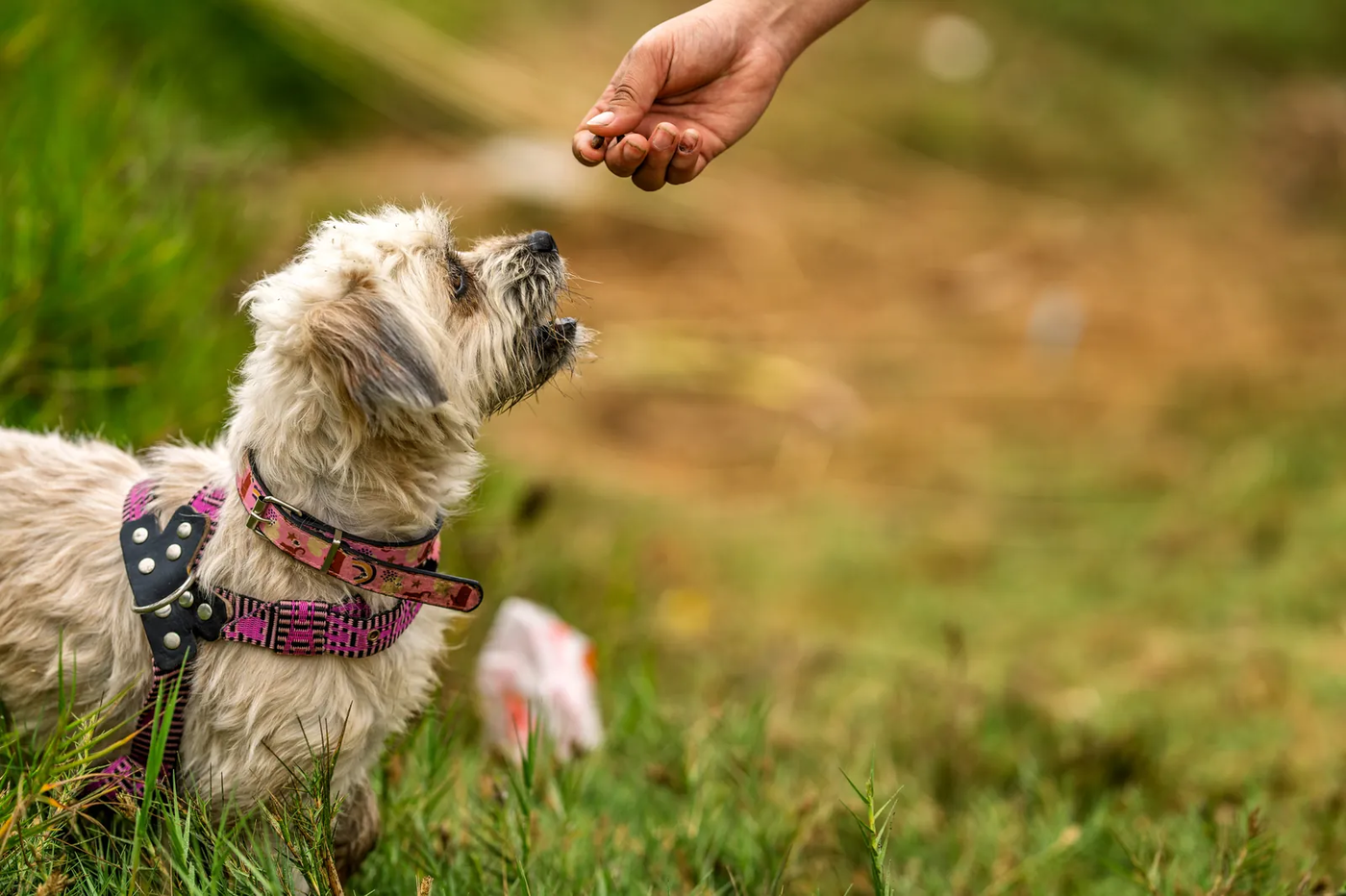
Food is the fastest way to tell a dog it just did the right thing. When a dog's rear touches the ground and a treat arrives within a second, the dog connects the two, and a few dozen repetitions later the word sit means something. That is true of a puppy, a senior and a ninety-pound shepherd, and it is why food is the first tool every dog meets in our house.
Food is a teaching tool, not a permanent wage. Once the dog knows the skill, the reward changes: praise that means something, the door opening after a calm wait, the leash released to sniff after a good heel, a game after a long place. Those rewards are available everywhere, all day, which is what makes the behavior last.
- Food marks the exact moment the dog gets it right
- Part of the daily ration becomes the reward budget
- Praise, play and freedom replace food as skills mature
- Boundaries come only after the skill is taught
Where food stops
Balanced training pairs generous rewards with fair boundaries, and food alone is not the whole method.
A dog that knows place and leaves it because a squirrel ran past is not confused; it has made a choice. Balanced training answers that with a fair, predictable consequence, such as being calmly returned to the bed, followed by praise when the dog holds it. Food is never used to bribe a dog out of a behavior it already knows is wrong.
There is also a moment when food does not work at all: a dog lunging at another dog on the sidewalk will not take a treat, and waving one at it teaches nothing. That is why distance comes first in reactivity work. At the right distance the dog can eat, and at that distance food for calm looking is one of the most useful tools there is.
- No food bribes for a known behavior
- A dog over threshold will not eat, so distance comes first
- Food for calm looking at the right distance
- A calm, fair consequence when the dog chooses wrong
Different dogs, different rewards
Food-crazy Labs, picky toy breeds, allergic dogs and ball-obsessed herders all get paid in their own currency.
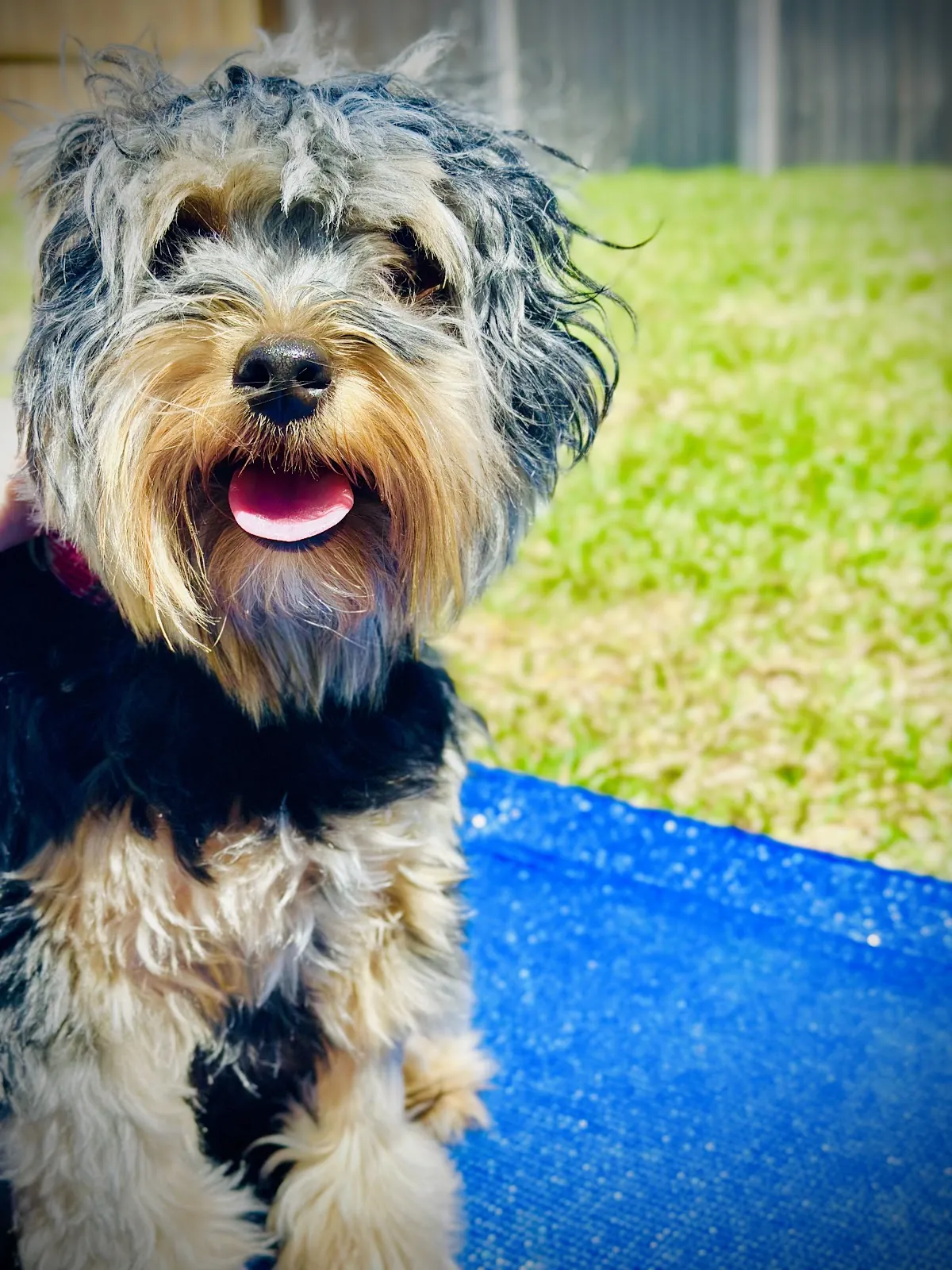
A Lab or a golden will work all day for kibble, which makes the job easy. A picky toy breed may need something better, a tiny piece of chicken or its own treat, and a shepherd or a border collie may care more about a ball or a tug than any food. Our trainer finds out in the first session what your dog values and uses that.
Allergies and sensitive stomachs are handled with the dog's own food. A dog on a prescription diet trains on its prescription kibble, portioned from the day's ration, so nothing new goes in. Tell our team on the call, and write it on the bag. Houston's heat matters too: dogs eat less on hot afternoons, which is one more reason the food-heavy sessions happen in the morning and evening.
At home after the stay
Keep food handy for the first weeks, then pay less often and with more variety.
The go-home session shows you the words, the timing and how our trainer rewarded your dog, and the first two weeks at home should look similar: a few treats in your pocket on walks and at the door. After that, start paying less predictably. A dog that sometimes gets a treat, sometimes praise and sometimes a sniff break keeps working harder than one that gets a treat every time.
Use the daily ration, not a bag of extras, if your dog tends to gain weight, and keep the rewards small, about the size of a pea for most dogs. Families in Katy, Spring or The Woodlands walking at dawn in summer will find a small pouch of kibble easier to manage than a pocket of soft treats in the heat.
Keep treats on you for the first two weeks, as our trainer did
Reward the exact moment, within a second
Start mixing food with praise, play and freedom
Pay less predictably once the skill is solid
Use the daily ration for dogs that gain weight easily
Never reward a behavior with food to stop it
What we do at Best Dog University
Every program uses food to teach, and every handover teaches you how to fade it.
Gold, two weeks at $2,500, teaches sit, place, the loose leash, doors and impulse control with food first, then adds boundaries and life rewards, and ends with a go-home session, an additional lesson and lifelong support. Platinum, three weeks at $3,750, uses food heavily in reactivity work at a distance the dog can handle, and adds unlimited private lessons.
The honest fit: if you want a program that never uses a boundary of any kind, ours is not it, and we would rather say so on the call. If you want a dog that learns with rewards and also understands no, that is exactly what balanced training does. Private lessons at $160 in Cypress or $220 at home teach you the timing yourself.
The programs
Programs that teach with food first.
Food to teach, boundaries after the skill is known, and a handover that shows you how to fade the treats.


Asked and answered
Questions people ask about this.
Will my dog only listen when I have treats?
Not if the food is faded properly. During the stay, food teaches the skill and is gradually replaced by praise, play and freedom. At home, keep treats handy for the first two weeks, then pay less predictably. Dogs that are paid every single time forever are the ones that check your pockets.
What treats do you use?
Part of each dog's own daily food is used as the reward, and treats are provided in the house. Dogs with allergies or on a prescription diet train on their own food only. Tell our team on the call about anything your dog cannot eat so it is written on the plan from day one.
Should I send treats with my dog?
You do not need to, since treats are provided. Send enough of your dog's regular food for the stay plus a few extra days, because part of it is used for training. If your dog is allergic or picky, tell our team on the call and agree what to send.
Is balanced training just treats plus corrections?
It is teaching first, with food, then fair and consistent boundaries for a dog that knows the skill and chooses otherwise, and the right tool for the individual dog. Rewards are generous and never withdrawn. The boundary is small, predictable and never a surprise, and it is never used on a frightened dog.
Sources
Keep reading
Free consultation · 10% off this fall
Want to know how your dog would be rewarded?
Tell our team what your dog loves on the free phone consultation, food, toys or praise. We will explain the plan, and a $250 deposit holds the dates.