
Breed questions · Doodles
Are goldendoodles hard to train?
Most families who ask this already own a doodle that knocks over guests and drags them down the sidewalk, and they wonder whether they picked a difficult dog. Usually they picked a smart, social dog and nobody set the rules early. Here is where the difficulty really comes from.
Last reviewed September 29, 2026 · by the Best Dog University Team
The short answer
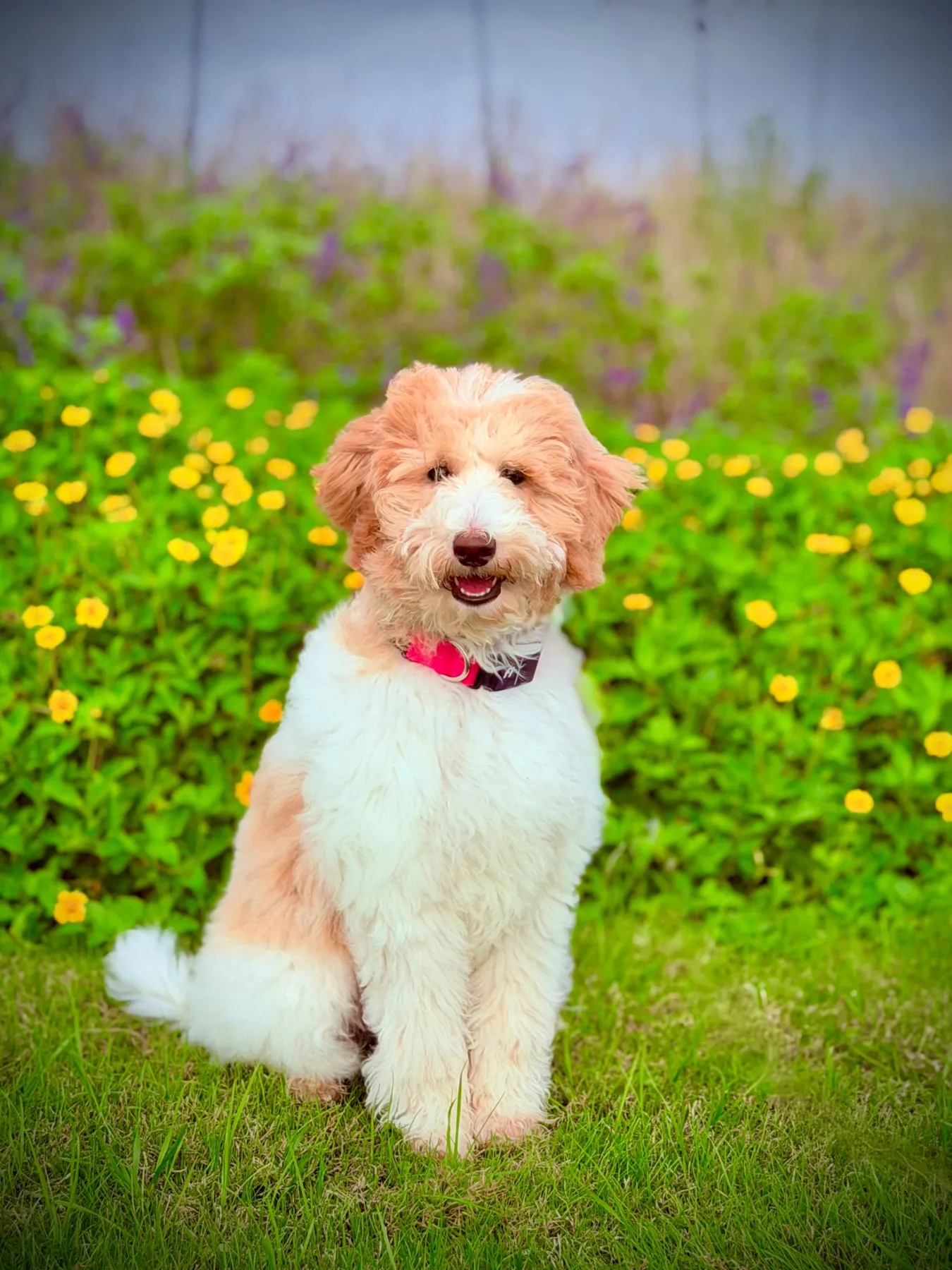
Not hard to teach, but easy to teach badly, because a doodle learns from every interaction.
Both parent breeds were developed to take direction. The golden retriever was bred to work beside a hunter and bring birds back to hand, and the poodle started as a water retriever long before it became a show and companion dog. Put them together and you usually get a dog that watches people closely, reads tone quickly and repeats whatever earned a reaction. That is ideal when the reaction is a treat for a sit, and a problem when it is a laugh at a jump.
The doodles our trainers meet in Cypress rarely struggle to understand a cue. They struggle with impulse: waiting at the door when a guest arrives, walking past a dog on the Towne Lake trail, staying on a bed while dinner is on the table. Those skills take repetition and a household that enforces them the same way every time, which is where most families slip.
- Quick to learn cues, often within a few short sessions
- Slow to learn self-control without structure
- Highly social, so attention works as a reward, good or bad
- Size and energy vary with the poodle parent
Why it feels hard
Doodles feel hard when the family is inconsistent, the dog is bored, or the size arrived before the manners.
Inconsistency is the first cause. One adult lets the puppy on the couch, another pushes it off, the kids reward jumping by squealing, and the dog learns that rules are negotiable. A doodle is clever enough to notice who enforces what and adjust. The fix is a short list of house rules, written down and followed by everyone, including visiting grandparents.
Boredom is the second. A standard goldendoodle is often a large, athletic dog with a retriever's urge to carry things and a poodle's urge to solve problems. Without a daily job that energy goes into shoes, fence running and barking. Size is the third: a sixty-pound adolescent that never learned to keep four feet on the floor is a real problem in a Katy entryway or on a crowded Bridgeland patio, even when it only means to be friendly.
What works
The routine that makes a doodle easy: place, a greeting rule and a walk with structure.
Order matters. Place comes first because it gives the dog something to do when it has nothing to do, which is exactly when doodles get into trouble. A greeting rule comes next because jumping is the complaint we hear most, and a structured walk follows because pulling is close behind.
Houston changes the timing. A doodle's coat holds heat, so outdoor practice between May and September moves to dawn and dusk, and midday work happens inside on the place bed or in a cool store aisle along 290.
Teach place on a raised bed and build it toward thirty minutes during meals and TV time.
Make four on the floor the price of every greeting, for family and guests alike.
Start each walk with a few minutes of structured heel before any sniffing or free time.
Hand-feed part of each meal as short training reps instead of filling a bowl.
Give a daily carrying or retrieve game so the retriever side has an outlet.
Test the pavement with your hand before every summer walk.
At Best Dog University
Most doodles fit our two-week Gold program at $2,500; the anxious or reactive ones need Platinum.
For a doodle whose problems are jumping, pulling, counter surfing and a front door that turns into a race, the Gold Board & Train covers the job in two weeks for $2,500. The dog lives in our trainer's home in Cypress, practices sit and place stays, loose leash walking and door manners every day, and comes home through a go-home session plus one additional lesson and lifelong support.
If the doodle has started lunging at other dogs or falls apart when left alone, the three-week Platinum at $3,750 is the honest fit, because it adds behavior modification, field trips and unlimited private lessons. A puppy under four months does better with the Puppy Development Bundle, four sessions at $550 in Cypress or $750 in your home, which sets the rules before the habits form.
- Gold, 2 weeks, $2,500: manners and obedience
- Platinum, 3 weeks, $3,750: reactivity or alone-time trouble
- Puppy bundle, $550 or $750: under four months
- Private lessons, $160 or $220: you train, we coach
The programs
Programs that fit a goldendoodle.
Gold for manners, Platinum for the reactive or anxious doodle, and the puppy bundle for the first months home.


Asked and answered
Questions people ask about this.
Are goldendoodles smart?
Yes. Both parent breeds learn quickly and pay close attention to people, and most doodles pick up new cues in a few short sessions. Intelligence cuts both ways, though. A clever dog also learns that whining opens the crate and jumping earns a hug, so the same brain that makes training fast makes loose rules expensive.
Are mini goldendoodles easier to train than standards?
Not easier, just smaller. A mini learns at the same speed and has the same social drive, so jumping and demand barking show up just as often. The difference is consequence: a small doodle on a guest is annoying, while a large one can knock someone over. Train either one the same way, starting on day one.
At what age should I start training a goldendoodle?
The day the puppy comes home, usually around eight weeks. Start with the crate, the potty routine, a name game and four on the floor for every greeting. Short leash sessions can begin right away. Expect an adolescent phase somewhere between six and eighteen months when a trained doodle seems to forget everything, which is normal and passes with consistency.
Why won't my goldendoodle stop jumping?
Because jumping still pays somewhere. If anyone in the house pets, pushes or talks to the dog while its feet are on them, that is attention, and attention is the reward a doodle wants most. Make four on the floor the only way to be greeted, use a leash or the place bed when guests arrive, and hold that line for several weeks.
Do goldendoodles need professional training?
Many do fine with a committed family and a few private lessons at $160 in Cypress or $220 at home. Board and train makes more sense when the habits are set, the dog is big, the family is stretched thin, or there is reactivity or trouble being alone. Our team will say honestly on the free consultation call which route fits.
Keep reading
Free consultation · 10% off this fall
Tell us what your doodle does.
Book the free phone consultation and describe your doodle's day. Our team will say plainly whether lessons or a board and train fits, and a $250 deposit holds your dates.