June
Road-trip season: teaching the car.
Summer road trips from Houston start with a dog that rides calmly. How to teach the car in two weeks, from the driveway to the highway, and what to do about the drooler.
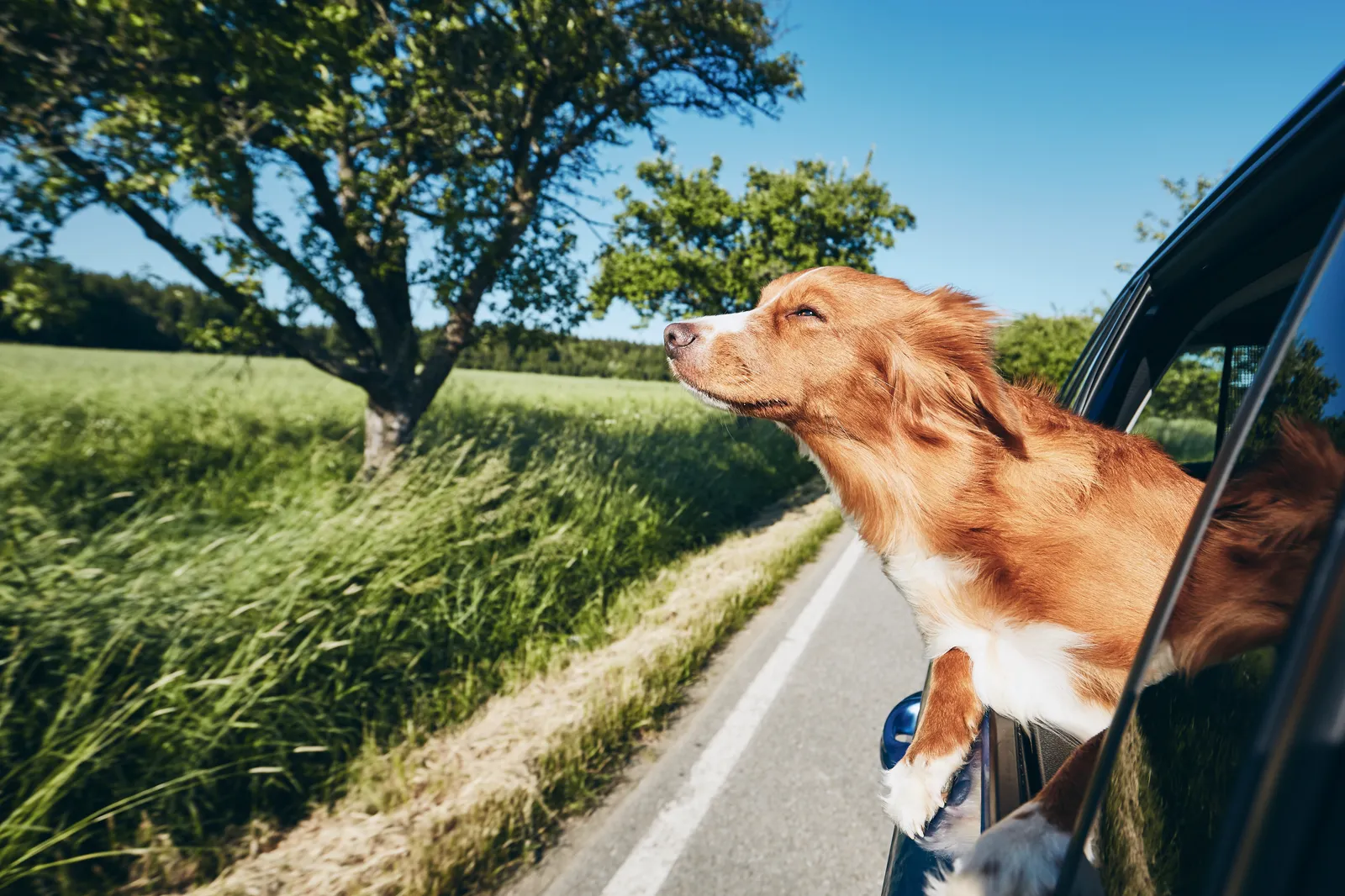
A dog that whines, paces or drools for the whole drive to Austin makes a road trip miserable, and most of them learned it in the first month of their lives when the car only ever went to the vet. Teaching the car is a two-week project, and June is when families finally do it.
Two weeks, five steps
- Days one to three: the dog eats dinner in the crate in the parked car, engine off, doors open
- Days four to six: engine on, no movement, then the driveway and back
- Days seven to ten: five-minute drives that end somewhere good, a field, a store, a friend
- Days eleven to fourteen: thirty minutes on the highway with a stop and a walk
- Always crated or secured, never loose on a seat, and never left in a parked car in a Houston summer
The drooler and the pacer
Drooling is usually nausea and gets better with an empty stomach and short, frequent drives. Pacing is arousal, and it gets better with a crate the dog cannot pace in and a calm handler who does not narrate the drive. If the dog is frantic before the car even starts, that is car anxiety, and it responds to the same structured exposure we use for every other fear. Ask on the free call whether a lesson in your driveway is the right start.
The car as a field trip
Every dog in the training home rides to a store, a park or the lake several times a week, crated, and by the end of a stay the car means something good is about to happen. That is the association to build. For two weeks, the only places the car goes with the dog are good ones: a field for recall practice, a friend's yard, a pet store aisle for a sniff. The vet trip, when it comes, is one drive in twenty rather than the only drive the dog has ever taken.
- Crate secured with the seat belt or a strap; a loose crate is a projectile
- Windows up, air on, no head out the window on a highway
- Stops every two hours for water and a leashed walk, and the leash goes on before the door opens
- Never left in a parked car between May and October, for any length of time
The long drive itself
Feed the dog three hours before you leave, not in the car. Start early, before the heat and the traffic on I-10 and I-45 build. Give the dog a chew when the drive starts and ignore whining, which stops faster when nobody answers it. At the stops, run one minute of place on the grass before the walk, so the dog arrives at each new place already working. Arrive, set up the crate and the place bed first, then unpack. A dog that has done ten short good drives and one long one handles the trip to Colorado; a dog that has done none handles it badly, and everyone in the car knows it by Huntsville.

Best Dog University Team
Board and train trainers in Cypress, Houston. 16+ years, 900+ dogs. About our team