August
Back to school for the puppy who was never alone
The spring puppy has had a person home every hour since it arrived. School starts in three weeks. The alone-time build our trainers run, from the crate to the first empty house.
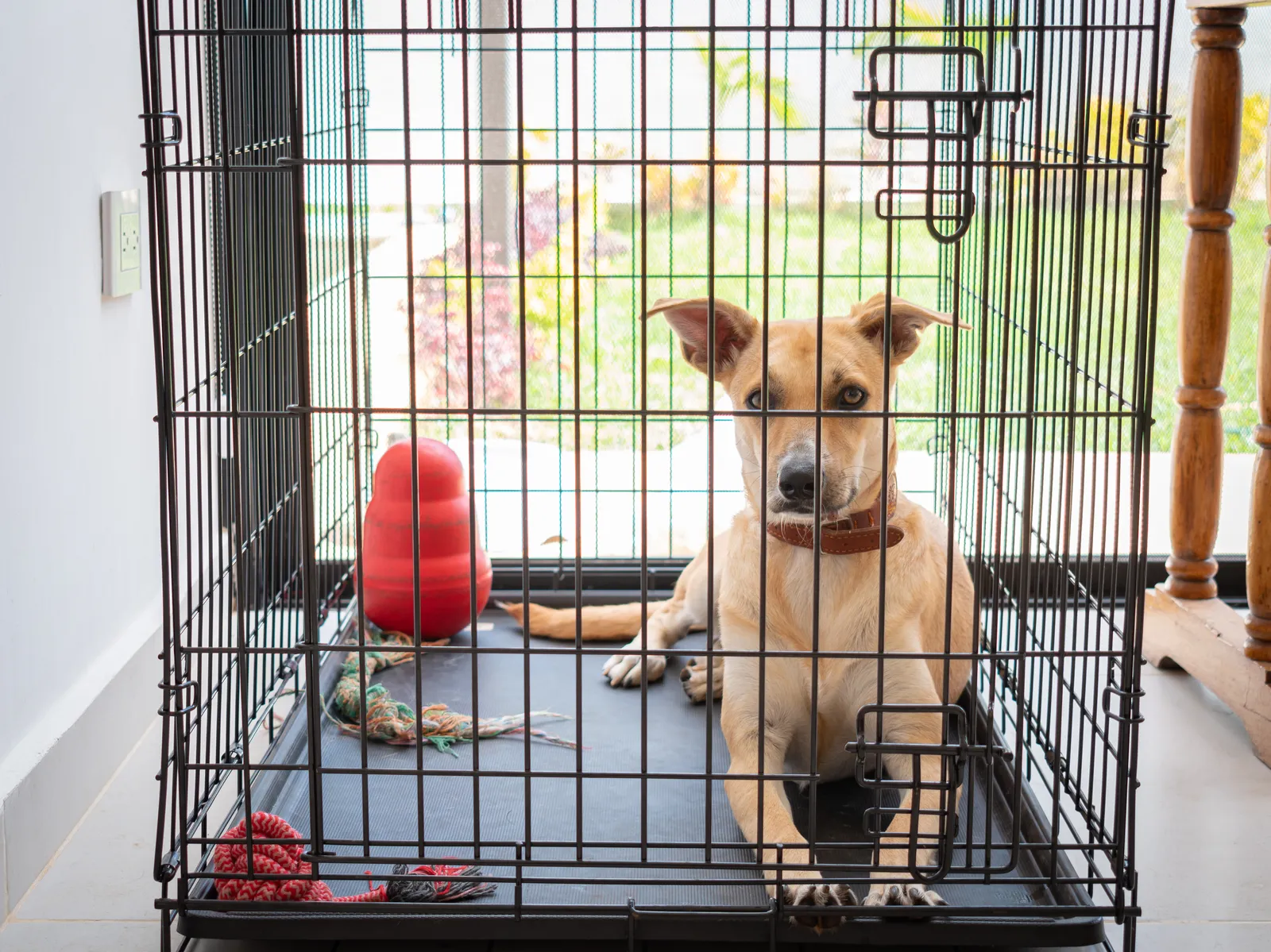
A puppy that came home in April or May has never been alone. Somebody was working from home, then the kids were out of school, and for four months the house has had a person in it every hour of every day. Houston districts go back in the middle of August. The puppy is about to spend six hours alone, five days a week, and the families who start the build now are the ones who do not call us in September about a dog that howls, chews the door frame or empties its bladder in the crate.
Three weeks is enough, if you start today
Being alone is a skill, and like every skill it is built in small steps. The first step is a puppy that is in the crate while people are home and does not care. The last step is a puppy that hears the front door close and goes to sleep. The steps between are minutes, then tens of minutes, then an hour, and the mistake families make is jumping from ten minutes to six hours because school started.
The build
- Week one: the crate is where the puppy eats, naps and has a stuffed toy, with the door closed and the household going on around it. Three sessions a day, ten to twenty minutes, nobody talking to it.
- Week one, evenings: leave the room. Come back before the puppy makes a sound, not after. Build to twenty minutes out of sight.
- Week two: leave the house. Keys, door, car in the driveway, back in five minutes. Then fifteen. Then forty-five. Same crate, same toy, no fuss on the way out or the way in.
- Week two, the goodbye: a structured walk before you leave, fifteen minutes at first light, so the puppy is tired and empty when the door closes.
- Week three: two hours, then a half day. On the first day of school, the puppy has done four hours at least twice.
Twice a day, every day. The puppy that has watched the family leave calmly forty times in three weeks does not notice the forty-first.
The three things that undo it
A dramatic goodbye, a dramatic hello, and letting the puppy out for noise. The first two teach the puppy that leaving is a big event. The third teaches it that crying opens the door, which is the one lesson you cannot afford in August. Walk out like you are going to the mailbox. Walk in and ignore the puppy until it is quiet, then open the crate. If the puppy is crying when you get home, wait outside the door for the first pause and then go in.
If the puppy is already panicking
Drooling in the crate, a chipped tooth on the bars, or a puppy that screams from the moment the door closes is not a puppy that needs a faster schedule. It needs a trainer to see it, because separation anxiety gets worse with every rehearsal. An in-home lesson, $220, puts our trainer in the house for the departure itself. The Puppy Development Bundle covers the crate and alone time within its four sessions for puppies under four months, $550 in Cypress or $750 in-home. For an older puppy that has already built the panic, two weeks of Gold at $2,500 in a home where the crate is normal is usually the reset that works.

Best Dog University Team
Board and train trainers in Cypress, Houston. 16+ years, 900+ dogs. About our team