
Free-Style vs Agility
Free-Style vs Agility board and train: which enrichment program
These two programs exist for the dog who already sits, stays and walks nicely and still drives you slightly mad. Both cost the same and take the same two weeks in our Cypress training home. The difference is what the dog's brain and body get to do, and which one your household will keep up.
Last reviewed September 11, 2026 · by the Best Dog University Team
Side by side
Same price, same fortnight: one builds focus, the other builds athletic control.
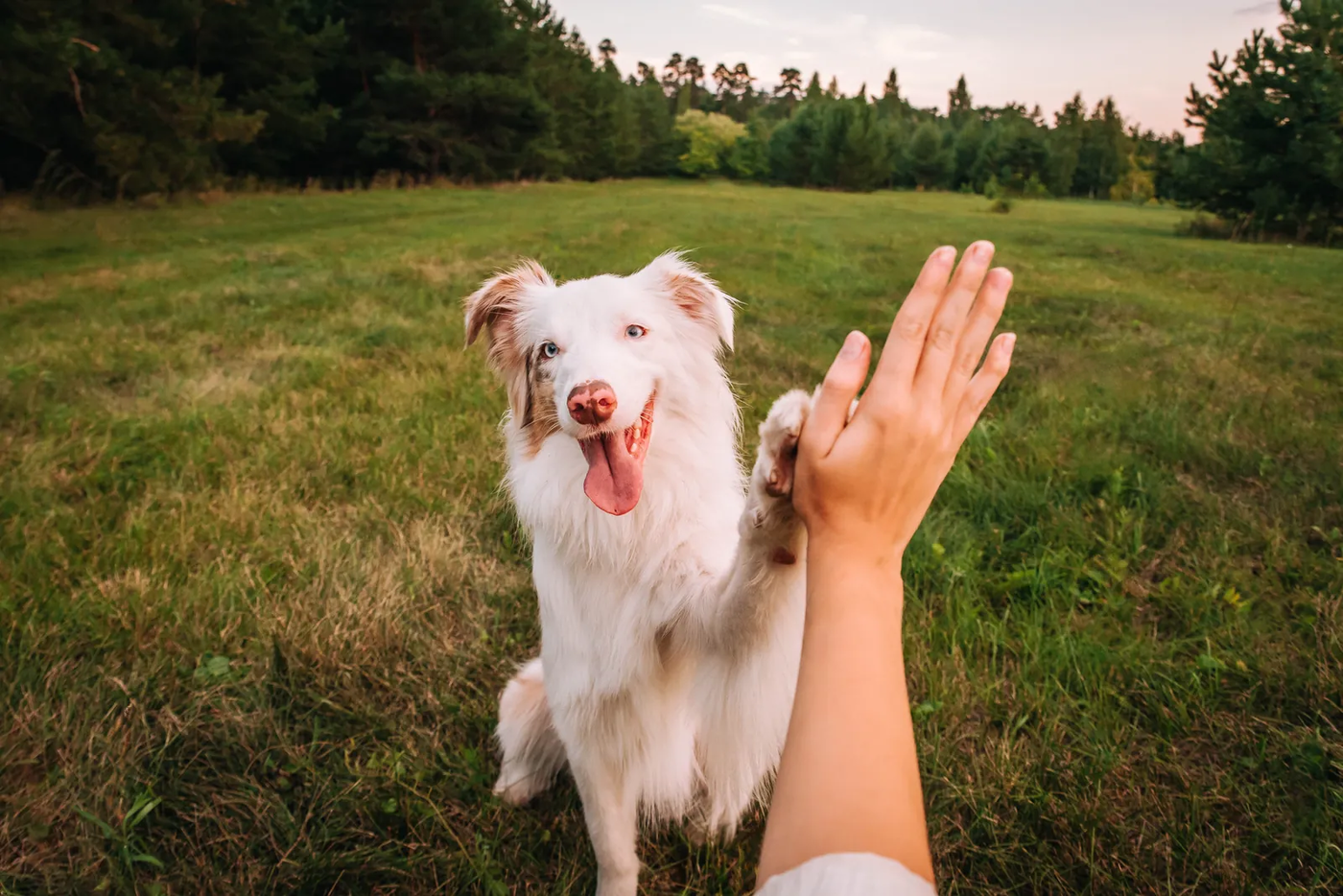
Free-Style is engagement training. Over two weeks our trainers teach paw, spin, twirl, weave through the legs and center (the dog moving between your feet and facing forward), each one shaped through markers and rewards. The real product is not the tricks. It is a dog who watches your face, offers behavior, and finds working with you more interesting than the squirrel. That focus carries straight into daily life.
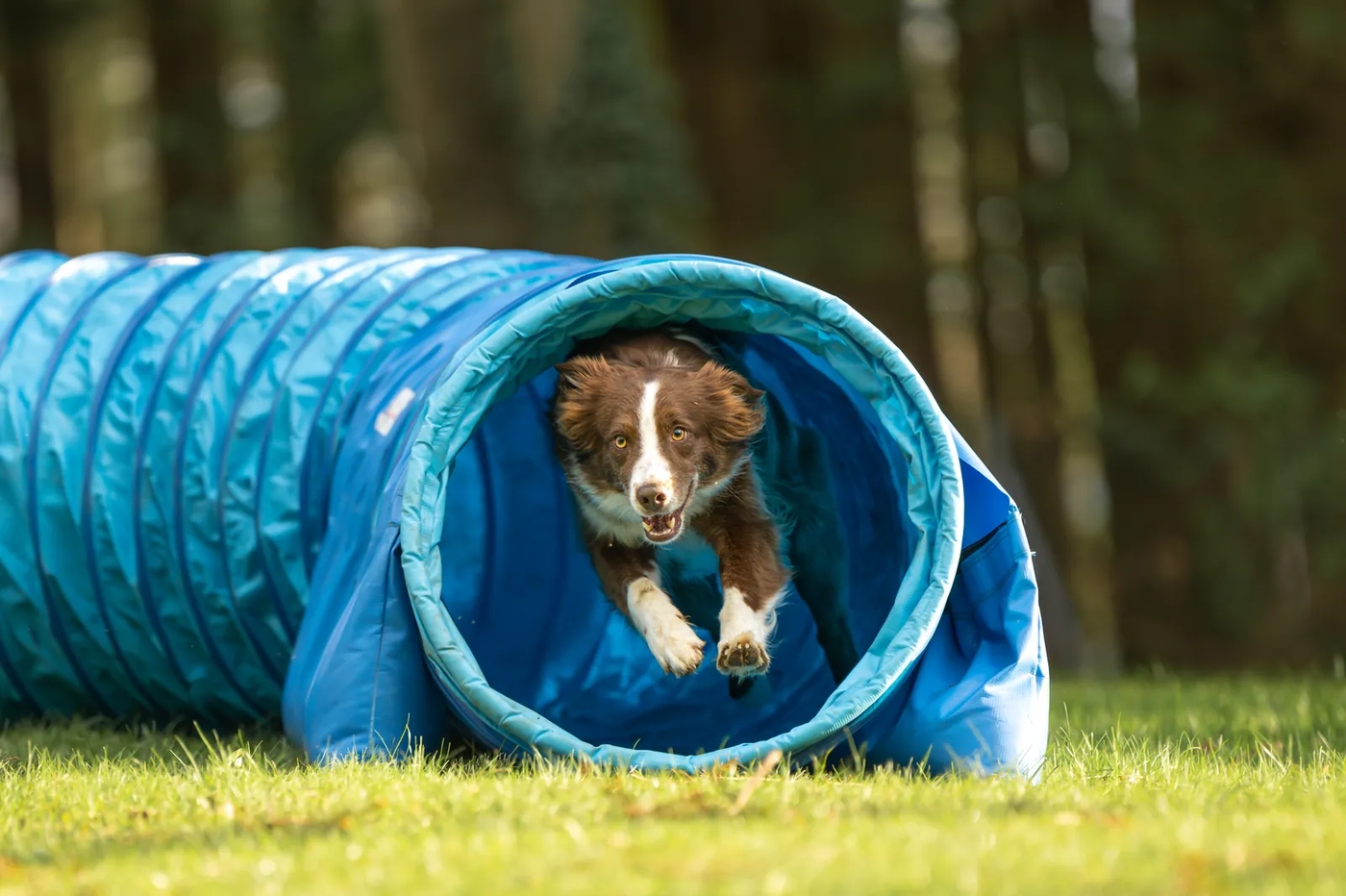
Agility is physical problem-solving. The dog learns weave poles, jumps, the A-frame, tunnels and the seesaw, and learns to take direction at speed. The by-product is impulse control under excitement, which is why it suits the Border Collie, the Aussie or the young Lab whose energy has nowhere to go. Both programs include Monday, Wednesday and Friday updates and a go-home session where you learn to run the routine.
| Free-Style Board & Train | Agility Board & Train | |
|---|---|---|
| Length and price | 2 weeks, $2,500 | 2 weeks, $2,500 |
| Prerequisite | Basic obedience | Basic obedience and a sound, energetic body |
| What the dog learns | Paw, spin, twirl, weave, center, engagement | Weave poles, jumps, A-frame, tunnels, seesaw |
| What you get at home | A dog who watches you and offers focus; indoor practice | A dog who takes direction at speed; needs space to practice |
| Best for | Bright, bored, food-motivated dogs; small homes; hot months | Athletic, high-drive dogs; yards or fields; cooler months |
| Not for | Fixing behavior problems | Fixing behavior problems, or dogs with joint concerns |
When Free-Style wins
Free-Style wins for the bright dog, the small home and the Houston summer.
A Poodle mix in a Heights townhome, a Cavalier in a Memorial condo, a Sheltie who has learned every command by fourteen months and now invents her own games: these are Free-Style dogs. The work happens in a living room, on a patio, in a hallway. It needs no yard and no equipment, which matters in Houston from May to September when outdoor sessions are pushed to dawn and dusk by the heat.
Free-Style also wins for a dog whose engagement is the problem. If your dog is obedient but disconnected, glancing at you and then away, the trick work rebuilds the habit of looking to you first. Families with kids like it because a nine-year-old can cue a spin safely. And the practice is short: five minutes twice a day keeps the whole routine sharp for the life of the dog.
- Bright, food-motivated, learns fast
- Little or no yard
- You want engagement and focus, not speed
- Kids will be involved in the practice
- You are booking in the hot months
When Agility wins
Agility wins for the athlete who needs a job before he invents one.
Herding breeds, working Labs, Vizslas, young shepherds: a dog built to run all day needs an outlet, and without one he digs up the Katy backyard, patrols the fence line or spins at the door. Agility gives that drive a shape. Two weeks of poles, jumps and the seesaw teaches him to run flat out and still listen, which is impulse control disguised as play.
Agility also wins for households with room to keep it going: a fenced yard in Bridgeland, acreage toward Magnolia, or regular access to an open field. Our team shows you how to set up a simple course at the go-home session. Watch the ground in summer, though. Pavement and turf both hold heat, and fire ant mounds in a yard are a real hazard when a dog is running lines, so walk the space first.
- A herding, sporting or working breed with energy to burn
- A fenced yard or a field you can use
- The dog is physically sound and past the growth stage
- You want exercise that also builds control
- You enjoy running a routine with the dog
What Houston families choose
Houston families lean Free-Style in summer and Agility in the cooler months.
The calendar decides more than the breed. From late spring through September, families book Free-Style because the practice moves indoors with the air conditioning, and a dog can learn center and weave on a kitchen floor. From October to April, Agility bookings rise, because a Cypress or Tomball backyard is usable all day and the dog can run a course after work without the heat risk.
The second pattern is the graduate. Most dogs in either program have already completed Gold or Platinum with us, and the family wants the next thing. That is the right order. A dog without basic obedience does not benefit from either program, and our team will say so on the phone consultation and suggest Gold first, even though the price is identical.
How to decide
Choose the enrichment program in five steps.
The decision is lighter than the obedience decisions elsewhere on this site, but it still deserves five minutes. Get the prerequisite right and the rest is about the dog's body and your space.
Confirm the prerequisite: the dog sits, stays and walks on a loose leash. If not, book Gold first.
Look at the dog's body. A heavy, older or still-growing dog points to Free-Style; a fit adult athlete can do Agility.
Look at your space. No yard means Free-Style. A yard or field opens Agility.
Check the month. Summer starts favor Free-Style's indoor practice.
Ask what you want at the end: a dog who watches you, or a dog who runs with you. Pick accordingly.
The programs
The enrichment programs, and the prerequisite.
Free-Style and Agility are the two-week programs for dogs who already have obedience. Gold is where obedience is built.

Asked and answered
Questions people ask about this.
Can a dog do both programs?
Yes, and some do, usually a few months apart. Most families start with Free-Style because the engagement work makes the Agility work faster later. Each is a separate two-week stay at $2,500 with its own go-home session. Our team will suggest the order on the phone consultation based on the dog's age and build.
Is Agility safe for a puppy?
Agility involves jumps, an A-frame and a seesaw, so our team prefers dogs who are done growing and physically sound. For a young dog under a year, Free-Style is the better enrichment choice, and it can start as soon as basic obedience is solid. Ask your vet about your dog's joints if you are unsure.
Will Free-Style fix my dog's jumping or pulling?
No. Free-Style and Agility are enrichment programs for dogs with basic obedience already in place. Jumping, pulling and impulse control are covered in the two-week Gold program at the same $2,500, and reactivity is a Platinum job at $3,750. Enrichment comes after the foundation, not instead of it.
Do enrichment dogs still get field trips?
Free-Style and Agility dogs train at the home and on the property, with the same Monday, Wednesday and Friday updates as every other stay. Public field trips into stores and parks belong to Platinum and VIP, where behavior modification is the goal. Enrichment graduates who want public work can add private lessons at $160.
Sources
Keep reading
Free consultation · 10% off this fall
Which enrichment program? Ask our team.
Describe the dog's energy, your space and the month on the free phone consultation. Our team will pick Free-Style or Agility with you, and a $250 deposit reserves the two weeks.