
Puppies and lessons
Is puppy class or private lessons better?
Our trainers run private lessons and the puppy bundle and do not run classes, so read this with that in mind, and then notice that we still recommend a good class for some puppies. The two do different jobs, and the right answer depends on the puppy and the house.
Last reviewed September 11, 2026 · by the Best Dog University Team
The short version
Lessons for the house, a class for the room, and neither instead of the daily work.
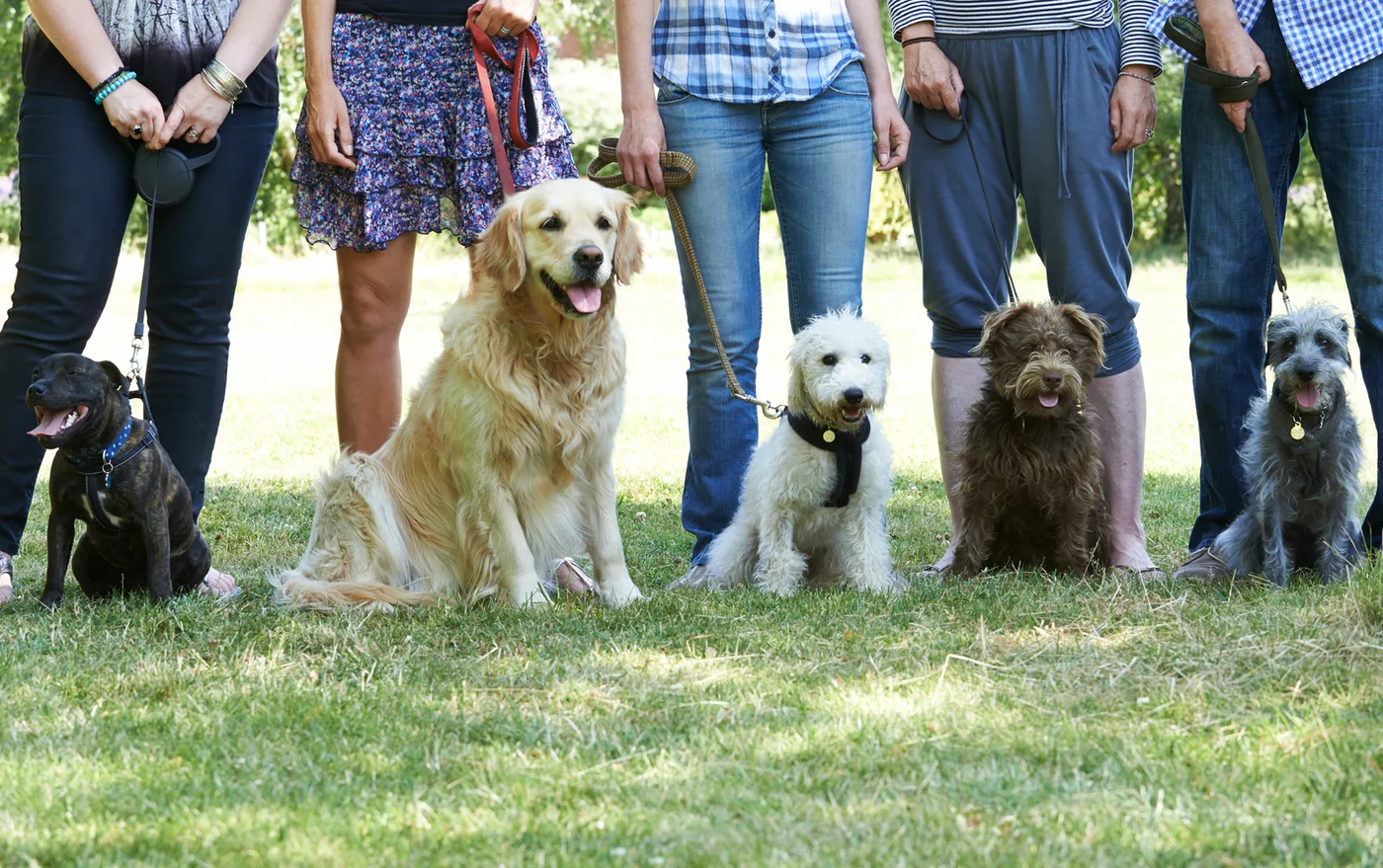
A private lesson puts a trainer in your living room with your puppy, your children and your door, and the things that matter most in a puppy's first months, the crate, the potty routine, the greeting rule, the mouth, the door, the first leash work in your yard, are household skills that a trainer fixes fastest by seeing the household. A class puts your puppy in a room with six others and their people for an hour a week, and the one thing it teaches that a lesson cannot is how to work with other puppies and strangers nearby, which is real socialization if the class is well run. A class cannot fix your crate or your door, and a lesson cannot supply the room. Both are useless without the two-minute sessions at home in between.
- Lessons: the crate, the potty routine, the door, the mouth, the yard
- A class: working around other puppies and strangers
- A class cannot fix the house; a lesson cannot supply the room
- Neither works without the daily minutes at home
The reasoning
What a good class looks like, what a bad one does, and where lessons win outright.
A good puppy class is small, run by a trainer who keeps the puppies working rather than playing, with the nervous puppy given distance and the bold one given structure, and with the people taught as much as the dogs; it is a controlled version of the world and it is valuable in the socialization window. A bad class is a free-for-all in a room, where the bold puppies learn to bully, the shy ones learn to fear dogs and everyone goes home thinking that was socialization; it does more harm than no class. Lessons win outright for the fearful puppy, who needs distance rather than a room; for the household with children, who have to be trained too; for the puppy with a problem already, biting hard, guarding, soiling the crate; and for the family that wants a plan rather than a curriculum.
Cost runs the other way: a class is cheaper per hour than a lesson. It is also an hour a week of a trainer's divided attention, and a lesson is an hour of undivided attention to the puppy and the house that have the problem.
- A good class: small, working not playing, distance for the nervous puppy
- A bad class: a free-for-all that teaches bullying and fear
- Lessons win for fearful puppies, households with children and problems already started
- A class is cheaper per hour and divides the attention
What it means for your puppy
The bold puppy, the shy puppy, the puppy with a problem, and the experienced family.
A bold, friendly puppy with no problems and a family that has done the foundation does well in a good class for the room, with a lesson or two for the door and the walk. A shy or fearful puppy does badly in any class until it has a floor under it, and lessons with exposure at a distance come first. A puppy with a problem already, biting that is getting harder, a soiled crate, guarding, a fear of the leash, needs a trainer in the house now, because a class teaches a curriculum and the puppy needs a plan. An experienced family that has raised dogs before can often do the foundation alone and use a class for the room, and a single lesson as a check.
- Bold and friendly: a good class for the room, a lesson for the door
- Shy or fearful: lessons and distance first, a class later or never
- A problem already: a trainer in the house now
- An experienced family: the foundation alone, a class for the room, a lesson to check
The Houston factor
Classes in store corners, a summer that keeps puppies indoors, and the bundle in your home.
Houston's puppy classes mostly run in the pet stores along 290 and across the metro, in a roped-off corner of a busy store, which is good exposure and a hard room for a nervous puppy, so watch a class before you book one and ask how the trainer handles the shy puppy. Summer keeps puppies indoors and a class is one of the few air-conditioned outings a July puppy gets, which is a point in its favor. The puppy bundle's in-home sessions are built for the household half of the job, with the first session in the family's living room in the first week, and our team will say on the phone whether a class would help your particular puppy as well.
Do the foundation at home from day one, with lessons or the bundle for the plan
Watch a class before you book it: small, working, distance for the nervous puppy
Skip any class with free play as the main event
Keep a fearful puppy out of a room until it has a floor under it
Get a trainer into the house for any problem that has already started
Use a class for the room once the puppy can work with you in the yard
Keep the two-minute sessions at home going regardless of which you choose
The program
The bundle and lessons are the household half; a good class is the room.
The Puppy Development Bundle, four private sessions at $550 in Cypress or $750 in your home, covers the household half: the crate, the potty routine, sit, place, recall, handling, the mouth and the greeting rule, with the children present and socialization explained. Single in-home lessons at $220 or $160 in Cypress suit an experienced family that wants a check or a problem fixed. We do not run classes and will point you to what to look for in one. The puppy training page and the puppy class guide on this site describe both, and the free phone consultation is where our team says which your puppy needs.
The programs
Programs for the household half.
The puppy bundle for the plan and the house, lessons for a check or a problem, Gold later for the puppy that has outrun both.

Asked and answered
Questions people ask about this.
Are puppy classes worth it?
A good one, small and run by a trainer who keeps the puppies working and gives the nervous one distance, is worth it for the room: working around other puppies and strangers under supervision. A class that is mostly free play does more harm than no class. Watch one before you book.
Can private lessons socialize my puppy?
Lessons teach you how to socialize the puppy, which is calm exposure at a distance to people, dogs, places and sounds, mostly from a lap or a cart in the window before sixteen weeks. What a lesson cannot supply is a room of other puppies, which is where a good class comes in for the bold puppy.
Which is better for a shy puppy?
Lessons, with exposure at a distance and a floor of structure under the puppy first. A shy puppy in a busy class learns to fear dogs and people in a single bad hour. A class, if ever, comes after the puppy can work with you in the yard and at a store at a distance.
Can I do both a class and lessons?
Yes, and for a bold puppy with a family that wants help it is the best combination: lessons or the bundle for the crate, the door and the household rules, a good class for the room, and the daily two-minute sessions at home that make either one stick.
Keep reading
Free consultation · 10% off this fall
Lessons for the house, a class for the room.
Tell our team what your puppy is like and what you want from a class. The free phone consultation is a direct call, and we do not run classes.