
Private lessons · Real ranges
How many private dog training lessons do I need?
Nobody wants to sign up for an open-ended series. This page gives real ranges by problem, explains what happens in each session so you can judge the pace, and shows where lessons stop being the right tool.
Last reviewed September 10, 2026 · by the Best Dog University Team
The honest range
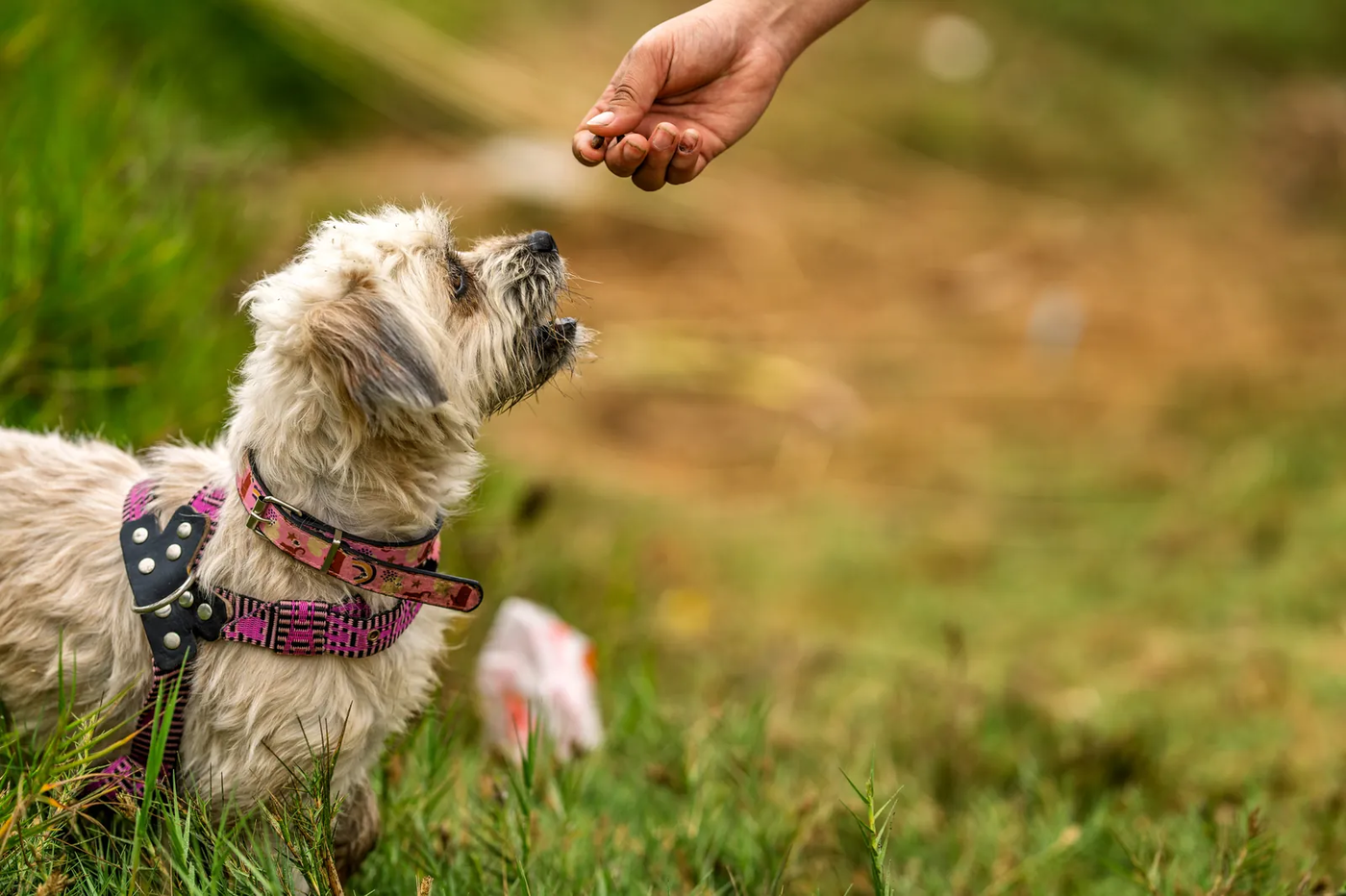
Three to six lessons handle most problems, if you practice.
A private lesson is not where the dog gets trained. It is where you get trained, and the dog learns during the week in between. That is why the count depends more on the household than the dog. An owner who does ten minutes of place and a structured walk every day can finish loose leash walking and door manners in three sessions. An owner who practices on the weekend before the lesson will need eight and still be frustrated.
Our team tells families this on the first call so the number is realistic. The trainer also sets a clear goal for each session, so you can judge progress by whether last week's homework held rather than by a count. If it did, the next skill gets added. If it did not, the lesson repeats the piece that broke, without pretending it was a new skill.
By problem
Different problems need different numbers.
The table gives the ranges our trainers see most often. They assume daily practice, a healthy dog and one problem at a time. Every dog in it needs a first lesson to diagnose, so the minimum is always one.
| Problem | Typical lessons | Notes |
|---|---|---|
| Puppy foundations under 4 months | 4 (Puppy Development Bundle) | Crate, potty, name, sit, place, recall, socialization plan |
| Loose leash walking | 2 to 4 | Fast once the owner's timing is right |
| Jumping on guests and door manners | 2 to 4 | Needs a family who all enforce the same rule |
| Place with duration | 2 to 3 | Most of the work is daily repetition at home |
| Recall on a long line | 3 to 5 | Distractions are added slowly |
| Reactivity, anxiety or aggression | Usually board and train first | Weekly lessons are too infrequent for daily behavior change |
Inside a lesson
Each session teaches you one thing well.
A session runs a little under an hour. The trainer watches the dog and the owner for the first few minutes, because the problem is usually in the handling. Then they demonstrate the skill with your dog, hands you the leash, and coaches until your mechanics are right. You leave with one skill, a short daily plan and a clear picture of what should be different by next week.
In-home lessons at $220 are worth the extra for anything tied to your house: the front door, the window, the kitchen or a specific room. Lessons at our training home in Cypress at $160 are better for leash skills and neutrality around other dogs, because the setting is new for the dog and our trainers have other dogs available at a controlled distance.
- One skill per session, taught to the owner
- A short daily plan, ten minutes a day
- Progress judged by whether homework held
- In-home for house problems, Cypress for leash and dog neutrality
Between lessons
The week between sessions is where the number gets smaller.
Practice does not need a training field. It needs two short sessions a day and the same rule from everyone in the house. In Houston summer, that means the leash work happens before 8 a.m. or after sunset and the place work happens indoors at noon. Owners in Katy or Cinco Ranch who drive 25 to 35 minutes to Cypress get more from a lesson when the previous week's homework is done, so the drive is the smaller investment.
Do the exact drill your trainer gave you, five to ten minutes, twice a day.
Practice in the room or on the street where the problem happens.
Keep a note of what broke, so the next lesson starts there.
Add one distraction only when the skill is solid without it.
Skip the dog park and the busy trail until the skill can survive them.
Bring what is not working to the next session instead of improvising a fix.
When lessons are not enough
Some problems need daily repetition that weekly lessons cannot give.
Reactivity, anxiety and aggression change through hundreds of correct repetitions in a short period. One lesson a week, with a stressed owner running the practice between them, rarely gets there. That is why our team usually recommends the three-week Platinum at $3,750 for those dogs, which includes unlimited private lessons afterward. The stay builds the behavior; the lessons teach you to keep it.
Hurricane season, June 1 through November 30, occasionally reschedules an in-home lesson, and our trainers will move sessions rather than cancel them. If in doubt about which route fits, the free phone consultation is where the count gets set.
- Behavior cases: board and train first, then lessons
- Manners and puppies: lessons alone are enough
- Platinum includes unlimited lessons after the stay
- Weather reschedules; it does not cancel
The programs
Lesson options with our trainers.
Single lessons, the puppy bundle, or a board and train with lessons included. The consultation sets the count.

Asked and answered
Questions people ask about this.
How much does a private dog training lesson cost with Best Dog University?
Private one-on-one lessons are $160 per session at our training home in Cypress or $220 in your home. The Puppy Development Bundle is four sessions of 45 to 60 minutes for puppies under 4 months, $550 in Cypress or $750 in-home. The phone consultation that sets the plan is free.
How often should private lessons be?
Once a week or once every two weeks. Weekly keeps momentum for a motivated family; every two weeks suits busy households who need more time to practice. Less often than that and the dog loses ground between sessions. Our trainers set the spacing on the first lesson based on how quickly the homework holds.
Can I do a single lesson?
Yes. A single in-home lesson is often enough to fix one door, one window or one greeting problem, because the trainer can see the setup and change it on the spot. It is also a good way to meet our team before committing to a series or a board and train.
Do private lessons work for reactive dogs?
They help, but usually not on their own. Reactivity needs daily controlled exposure, which is hard for an owner to arrange and run. Most reactive dogs do better with the three-week Platinum program first, then the unlimited lessons that come with it. Our team will say which on the free phone consultation.
Are private lessons better than a group class?
For a specific problem, usually yes. A private lesson works on your dog's issue in your setting, with a trainer watching your handling, which a group class cannot do. If your dog needs neutrality around other dogs, that is built at our training home in Cypress at controlled distances rather than in a room full of leashes.
What if my dog needs more lessons than expected?
Then the plan changes, and you are told why. Sometimes the cause is a medical issue the vet needs to see; sometimes the household rule is not being enforced by everyone; sometimes the problem is bigger than it looked and a short board and train is the faster route. Our team would rather adjust than sell you sessions.
Keep reading
Free consultation · 10% off this fall
Find out your number.
Describe the problem and how much time you have on the free phone consultation, and our team will tell you how many lessons it takes.