
Houston questions
How do I protect my dog's paws from hot pavement in Houston?
Paw burns are one of the most common summer injuries our trainers hear about, and almost all of them happen on a walk that felt fine to the person wearing shoes. Here is how to keep them from happening, and what to do if one does.
Last reviewed September 29, 2026 · by the Best Dog University Team
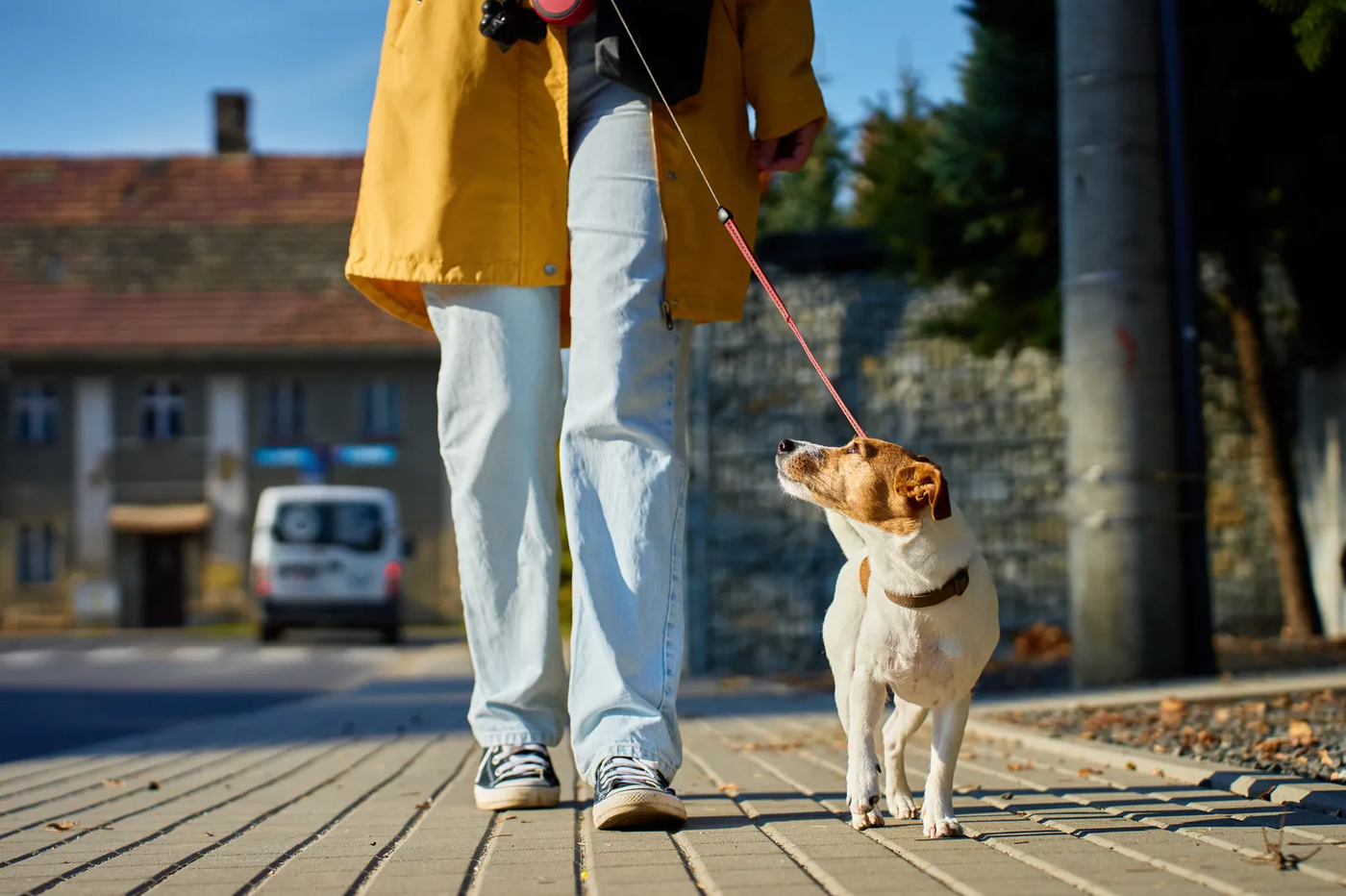
The hand test
The seven-second test at the door is the best protection, because it measures the ground your dog actually walks on.
Air temperature tells you little about the sidewalk. Concrete and asphalt in the Houston sun soak up heat all morning and hold it long after sunset, while your dog walks barefoot on them the entire time. Put the back of your hand flat on the pavement where you are about to walk, in the sun, and hold it there for seven seconds. If you cannot, the dog does not walk on it. The back of the hand is more sensitive than the palm, which is why it works.
Test the actual route, not just the driveway. A shaded driveway can pass while the sunny sidewalk around the corner fails, and the asphalt of a cul-de-sac is usually hotter than the concrete beside it.
- The back of your hand, flat, for seven seconds
- Test in the sun, where the dog will walk
- Test the route, not just the driveway
- Fail the test: grass only, or wait
Surfaces
Asphalt, dark concrete, metal and artificial turf burn first; shaded grass is the safe ground.
Black asphalt in parking lots and cul-de-sacs is the worst surface in a Houston summer, and a store parking lot at noon is where many burns happen, on the walk from the car to the door. Metal is next: truck beds, drainage grates, boat docks at Lake Conroe and the steps of a pool. Artificial turf, common on apartment rooftop dog runs in Midtown and in newer backyards, also gets very hot in direct sun, even though it looks like grass.
Pool decks, stamped concrete patios and brick walkways vary, so test them too. The safest walking surface is real grass in the shade, which is why a good summer route in Towne Lake or Bridgeland follows the greenbelt edge rather than the middle of the street.
- Asphalt parking lots and cul-de-sacs
- Truck beds, grates, docks and pool steps
- Artificial turf in the sun
- Real grass in the shade is safest
Booties
Booties protect only a dog that has been taught to wear them, and nothing replaces walking at the right hour.
Booties can help on an unavoidable hot surface: a parking lot between the car and a vet's door, a dock, a patio at a summer event. Most dogs hate them at first and walk like they are stepping in glue, and a dog that is fighting its feet is not paying attention to you or the traffic. The fix is a short, patient introduction indoors before summer arrives.
Even a dog that wears booties well still breathes the hot air. Booties protect the pads, not the rest of the dog, so the rules about hours, water and heat stress stay the same. Think of them as a tool for the car-to-door stretch at the vet in July, not for a neighborhood walk. If a dog still limps or lifts its feet in booties, the surface is too hot or the fit is wrong, and the walk should end.
Pick booties that fit snugly without pinching, one size at a time
Put one bootie on indoors, reward, take it off within seconds
Build to all four over several days, a treat for every one
Walk a few steps in the house, then the hallway, then the yard
Use them on short, unavoidable stretches, not full walks
Take them off indoors and check for rubbing
If a pad burns
Limping, licking, redness or blisters after a walk mean a burn, and a burn needs your vet.
A burned dog may start limping partway through a walk, lift its feet, refuse to move, or lick its paws hard once home. The pads can look darker, red, shiny or blistered, and sometimes a flap of pad peels away a day later. Get the dog off the hot ground right away, carrying a small dog, and cool the feet with cool water, not ice.
Then call your vet. Pad burns are painful, slow to heal and easily infected because the dog walks on them all day, and a vet can clean and dress them properly. Do not put human creams on a burn without advice. Keep the dog off hot ground completely while it heals, which in summer means potty breaks on shaded grass and indoor training until your vet says the pads are ready for walks again.
- Limping, lifting paws, refusing to walk
- Heavy licking once home
- Dark, red, shiny or blistered pads
- Cool water, then the vet
At Best Dog University
The pavement test is part of every summer walk our trainers take, and we teach families to make it a habit.
From May to September, dogs in our trainer's Cypress home walk at first light and after dark, and the midday work moves into the house and into air-conditioned pet and hardware stores along 290 and Fry Road. Our trainers test the ground before every outdoor session, and the go-home session hands that routine to your family along with the commands. A dog that walks at heel on the grass edge of the sidewalk is also a dog that is easier to keep off the hot middle of the path.
Gold at $2,500 and Platinum at $3,750 both build the loose-leash walk, and summer private lessons, $160 in Cypress or $220 at home, are booked for the ends of the day. If your dog pulls toward the hot middle of the street or drags you across a parking lot, that is a leash problem as much as a heat problem, and our team can tell you on the free consultation call whether lessons or a stay will fix it.
The programs
A walk that fits a Houston summer.
Gold and Platinum for a dog that walks at your side on the safe ground, lessons at the cool ends of the day.


Asked and answered
Questions people ask about this.
How hot does Houston pavement get in summer?
Much hotter than the air, and hot enough to burn pads on a typical summer afternoon. Rather than trusting a figure, use the seven-second test with the back of your hand where the dog will walk. It measures the ground on that day, in that spot, which a number from a website cannot.
Are puppy paws more at risk?
Yes. A young puppy's pads are softer and burn faster than an adult's, and puppies do not know to avoid the hot patch. Keep summer puppy outings to dawn and dusk on cool grass, carry the puppy across any hot stretch, and test the ground every time.
Do dogs' paw pads toughen up with summer walking?
Regular walking can make pads a little tougher, but no dog's pads are built for summer asphalt at noon. Do not rely on toughness. Walk at the right hours, test the ground, and keep the route on grass and shade wherever you can.
Is artificial turf safe for my dog's paws in summer?
Not in direct afternoon sun. Turf holds and radiates heat and can get hot enough to hurt, even though it looks like grass. Test it the same way you test pavement, water it down before use if your building allows, and use shaded or indoor areas in the heat of the day.
Can I use paw wax or balm instead of booties?
A paw wax can help protect against rough surfaces, but it is not heat protection on hot pavement. Ask your vet before relying on any product for burns. The dependable protection is the hour you walk and the surface you choose.
Keep reading
Free consultation · 10% off this fall
Test the ground, every walk.
Tell our team how your dog walks now. On the free consultation call we will say whether lessons or a stay fits your summer, and a $250 deposit reserves the dates.